Affiliate disclosure: As an Amazon Associate I earn from qualifying purchases. Learn more
There is exactly one spot in the entire country where you can plant a hand and foot in four different states without moving an inch. It sits far out in the high desert, reached by a lonely two-lane highway that seems to stretch toward nothing until a low monument appears.
People drive across whole states just to strike a goofy pose on a bronze marker and grin for the camera. Native artists line the edges with handmade jewelry, crafts, and warm fry bread that turns a quick photo stop into something richer.
The scenery on the way is worth the fuel alone. Stick around, because this remote desert marker hides more stories, quirks, and honest travel tips than its plain concrete circle lets on.
The Only Spot Where Four States Shake Hands
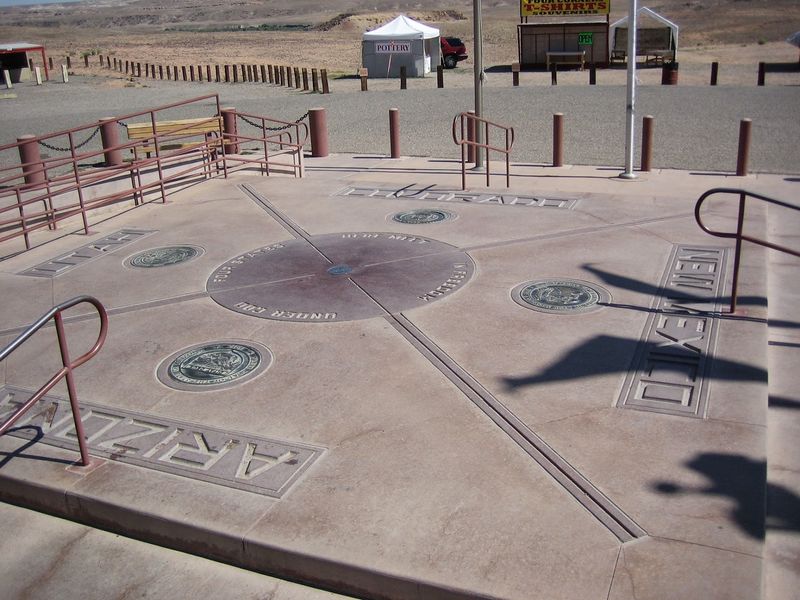
Out where the desert seems to swallow the road, the Four Corners Monument marks the single place in the United States where four states meet at one point.
You will find it at 597 NM-597, Teec Nos Pos, Arizona, on Navajo Nation land near the borders of New Mexico, Colorado, and Utah. The address may say Arizona, but the whole appeal is that you get all four at once.
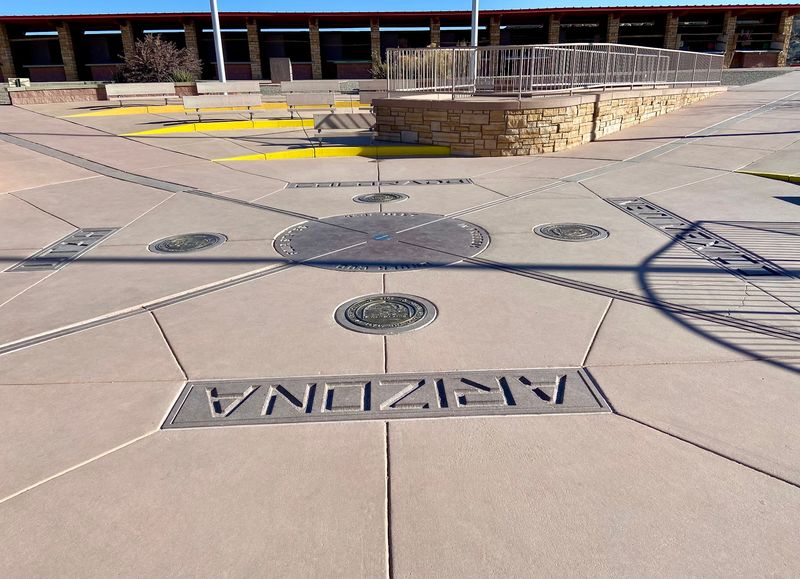
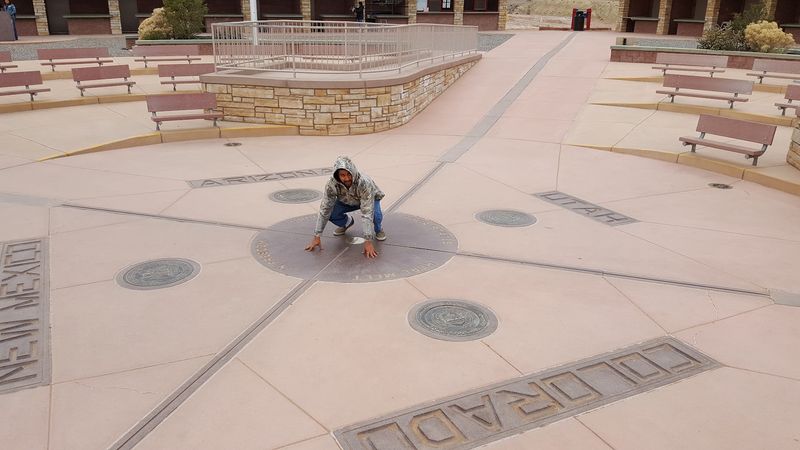
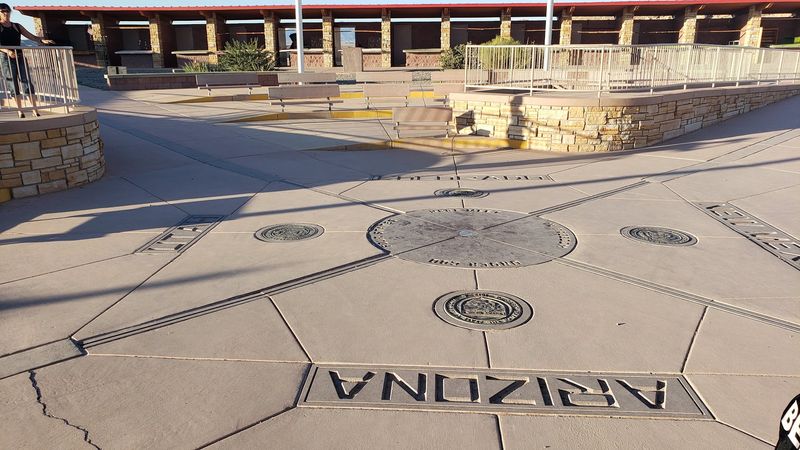
A bronze disk set into concrete marks the exact spot. Raised platforms rise at each of the four states, and everyone lines up to look down into that circle for the classic photo.
The monument sneaks up on travelers. Plenty of people spot it on a road sign and swing over less than an hour off their route without ever having planned to.
Standing with a foot in Arizona and Utah while your hands touch New Mexico and Colorado is the kind of small thrill that lands on bucket lists. It is simple, a little silly, and genuinely one of a kind.
A Monument Cared For By The Navajo Nation
Ownership matters here, and it shapes the whole visit. The site sits on tribal land and is operated by the Navajo Nation, with a visitor center on the grounds.
Because it rests on Navajo Nation land, admission is charged, and that fee helps keep the place running. Guests describe the Navajo hosts as gracious and welcoming.
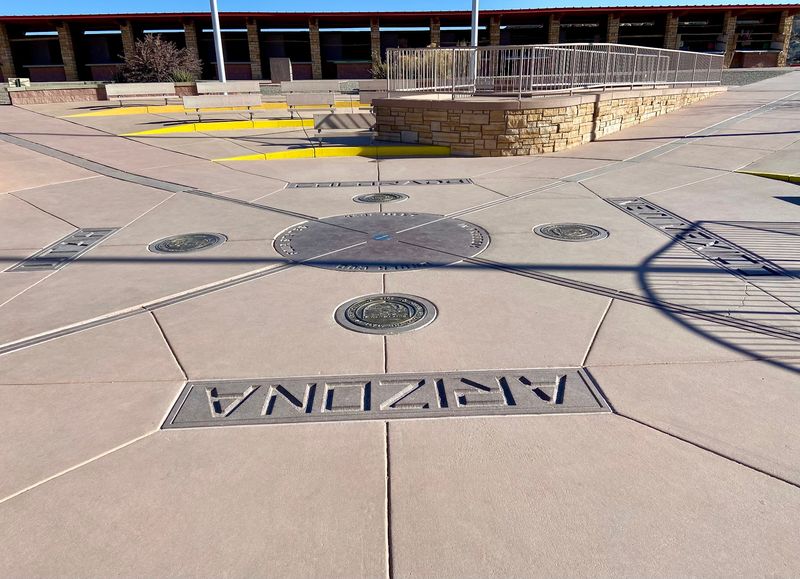
The monument itself has been fixed up beautifully in recent years. The plaza is clean, the platforms are well kept, and the state seals gleam around the central marker.
Managing an attraction this remote is no small task, yet the grounds stay tidy despite steady crowds through the day. That care shows in the details.
Buying directly from local artists is encouraged over generic souvenir shops, since the makers share the history behind each piece. It turns a photo stop into a genuine cultural exchange, and gives your visit a little more meaning than a snapshot alone.
The Long Drive Through Big Country
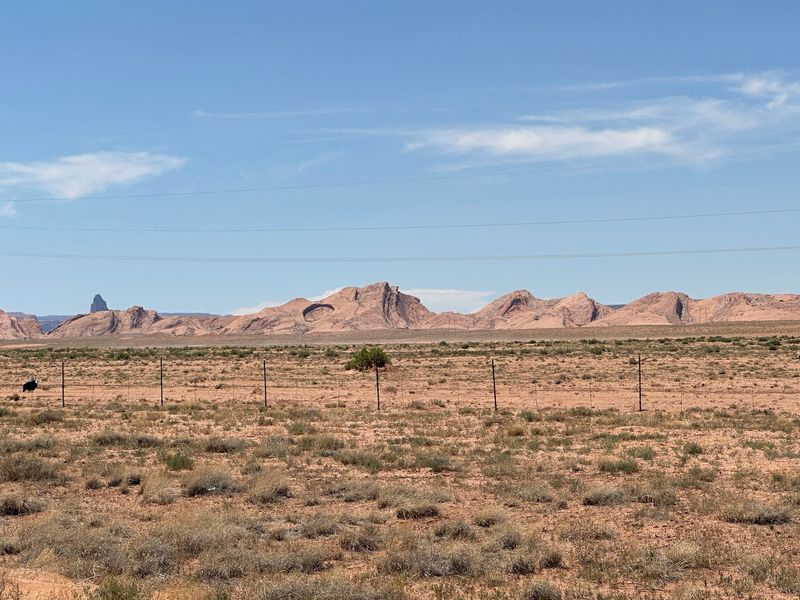
Getting here is half the story. The monument sits deep in the high desert, reached by a two-lane highway that runs through open country with little around it.
The drive rewards patience. Travelers rave about the scenery on the way, passing through the reservation with views of monument-style rock formations and wide valleys.
Remoteness is the trade-off. It is genuinely in the middle of nowhere, so you will need to plan for a stretch of driving before you reach any real town or services.
Some folks who found the marker itself a bit plain still called the surrounding drive absolutely worth it. That open landscape does a lot of the heavy lifting.
Fill the tank, pack water, and treat the road as part of the destination. By the time the low monument appears out of the flat distance, the journey has already earned its keep, and the pose at the center feels like a small reward for the miles.
Native Vendors And Handmade Treasures
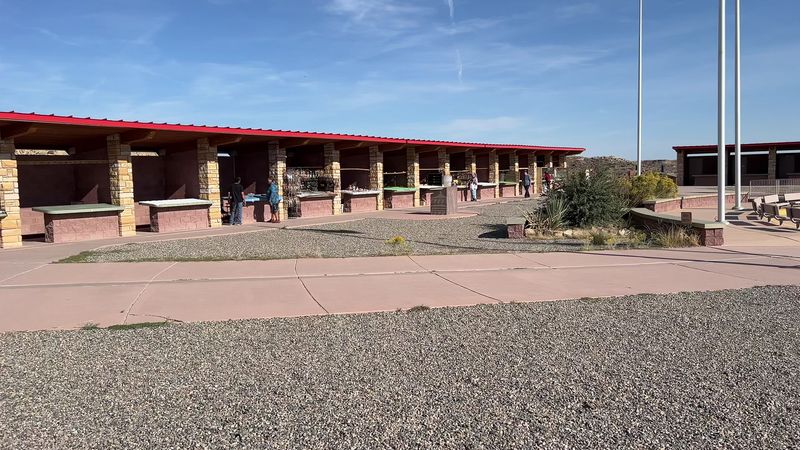
Ringing the monument, a border of vendor booths gives the whole place its heartbeat. Native American artists set up stalls selling handmade jewelry, pottery, arrowheads, dream catchers, and artwork.
Quality stands out. Many pieces are unique and finely made, and the artists happily share stories of their lives, customs, and how each item is created.
Not every booth is always filled. On hot, bright days only some stalls open, so a busy afternoon may look different from a quiet morning.
The vendors add a cultural weight that goes far beyond a quick photo. Browsing their tables and chatting about the craft turns the stop into something you remember.
Buying straight from the makers is the way to go here. Collectors leave with beautiful pieces and the backstory to match, which is worth far more than a mass-produced trinket.
Bring a little cash and take your time wandering the row.
Fry Bread, Tacos, And Roadside Bites
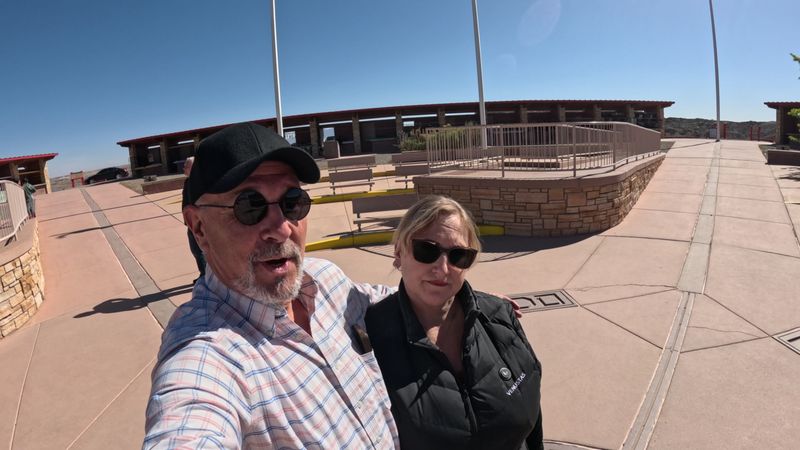
Hunger has an easy answer here. Food stands and trucks gather just outside the monument area, serving up local favorites to fuel the drive.
Fry bread is the star. Guests point to Navajo tacos, fry bread, snow cones, lemonade, and hot dogs among the offerings, and the food generally earns warm words.
Timing can catch you off guard. Some food trucks were not open close to the end of the day, so an early or midday visit gives you the best odds of a hot bite.
The vendors and food together give the site a lived-in, festival-like feel. It is more than a marker in the ground when there is warm fry bread nearby.
Grabbing a Navajo taco after your photo rounds out the whole stop. It is a taste of the region you cannot pick up on a chain-lined interstate, and it makes the detour feel complete.
The Famous Photo And The Waiting Line
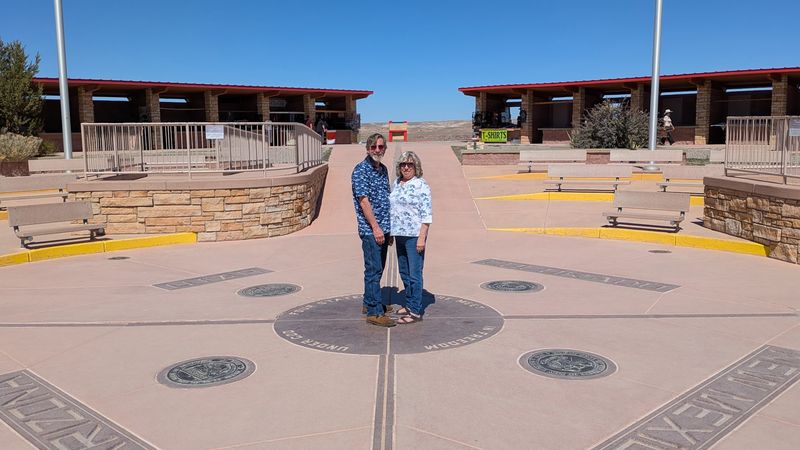
The whole reason most people come down to one snapshot. Everyone lines up to strike a pose on the central marker, hands and feet spread across all four states.
Kids especially love the challenge, twisting into creative poses for great shots. It is playful, quick, and endlessly repeatable.
Lines are part of the deal. Waits can run short on a quiet weekday or stretch up to around 45 minutes when the crowds build, so patience helps.
How long you wait depends on the day and hour. One group hit a Thursday with no line to enter and only about a five minute wait for the photo.
A friendly note: solo travelers can usually find someone happy to snap the picture for them. A few guests wished for a staff photographer, but strangers tend to pitch in.
Get your pose ready before you step up, and you will keep the line moving for everyone behind you.
What The Ten Dollar Fee Really Gets You
Money talk is honest here, and worth knowing before you arrive. Admission runs ten dollars per person, and payment for the entrance fee is by credit card only.
Older listings quoted eight dollars, so a few travelers were surprised at the higher price. For a family of five that adds up quickly, and some felt fifty dollars was steep just for a photo.
Others gladly paid it. Plenty of guests with a group of six or more called it well worth the experience and were happy to support the Navajo Nation.
Value here comes down to expectations. Treat it as a bucket-list stop with cultural depth and the fee lands better than treating it as a simple snapshot.
Bring a card, since cash will not cover the gate. Knowing the real price ahead of time saves the sting of surprise and lets you enjoy the visit on its own terms.
Hours, Restrooms, And Desert Weather Tips
A little preparation goes a long way at a spot this exposed. The monument opens daily from 8 am to 7 pm, seven days a week, so there is a wide window to plan around.
Facilities are basic. Restrooms are portable units with no running water, so set your expectations and pack hand sanitizer just in case.
Weather rules the day. The area gets hot with little shade, and wind whips through the open plaza since there is not much to block it.
Come ready. Bring water, sun protection, and plan for the elements, especially in the warmer months when the sun is intense.
Most people spend roughly half an hour to an hour here, longer if they eat or browse. There are picnic tables and benches to rest at, so you can slow down, cool off, and take it all in before the drive out.
Note that pets are not allowed on the grounds.
Is This Bucket List Stop Worth The Detour
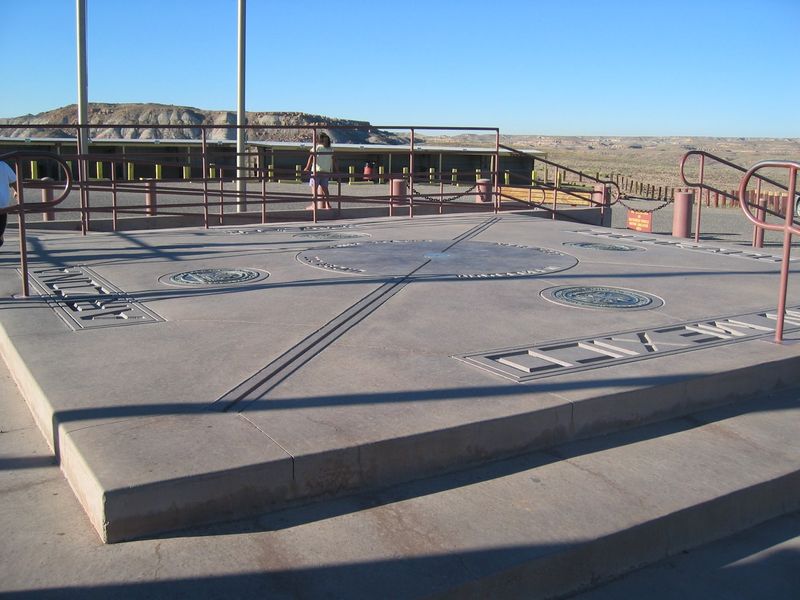
Opinions split here, and that honesty is refreshing. Some call it a bit of a tourist trap, a plain concrete circle in an enclosed area that did not wow them.
Yet even the doubters found things to love. The drive, the scenery, and the chance to support local artists win people over, and many say it is worth doing once just to say you did.
The believers go further. Guests traveling from as far as Texas loved it, calling it a must-stop for the culture, history, and the simple joy of standing in four states at once.
Kids are not always impressed, but parents often walk away glad they came. Everyone seems to leave with their own impression, which is part of its charm.
For Arizona travelers hunting a genuine one-of-a-kind stop, this remote marker earns its place on the list. Pair it with the open-road scenery, meet the artists, grab some fry bread, and you have a detour that pays you back in stories.