Affiliate disclosure: As an Amazon Associate I earn from qualifying purchases. Learn more
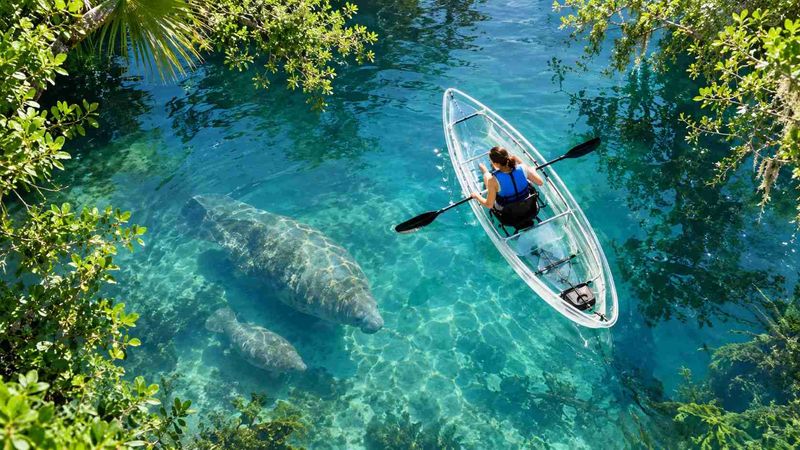
Crystal River, Florida, sits above a network of freshwater springs that attract hundreds of wild manatees every winter, making it one of the most accessible wildlife-viewing destinations in the state. Kayaking through Kings Bay puts you at water level, just feet from animals the size of a dining room table.
But before you book, the pricing story is more complicated than most headlines suggest, and getting the details right will save you from a surprise at checkout.
The under-$50 claim needs a crucial distinction
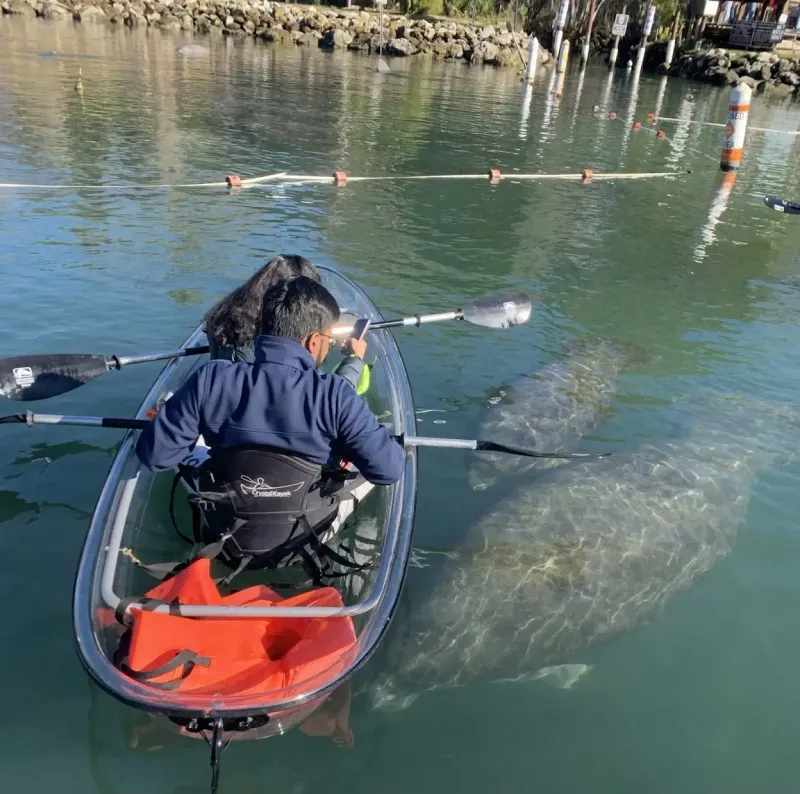
Sorting out what a Crystal River kayak outing actually costs starts with separating two very different products. Standard single-kayak rentals at Crystal River Kayak Company are currently listed at $40 for two hours and $50 for three hours, which puts a basic paddle within the budget most people picture.
Those rates apply to conventional kayaks, not to the clear-bottom models.
Clear-bottom kayaks, which use a transparent viewing panel built into the hull, are listed as a separate product at $93 for a single and $113 for a double. The guided clear-kayak tour runs approximately $103 per person for a 2.5-to-3-hour outing.
Combining the lowest standard-rental price with the clear-bottom experience is not accurate unless a specific booking page confirms both features at the same rate.
Manatee Paddle is a second local operator worth checking. Its public listings include standard kayak rentals starting at $45 for two hours and separately advertise clear-kayak tours, but the page does not clearly confirm that the lower rate covers the clear-bottom version.
Until a current booking page states otherwise, treat the affordable standard rental and the clear-bottom experience as two separate decisions.
A few additional variables affect the real cost. Rates are often priced per vessel rather than per person, so a tandem rental may cost more than the listed single price.
Duration matters too, because a two-hour rental at $40 and a three-hour rental at $50 produce different per-hour costs and very different amounts of time on the water. Verify every detail, including what is included in the price, directly with the operator before booking.
Crystal River offers wild manatee habitat, not a captive encounter
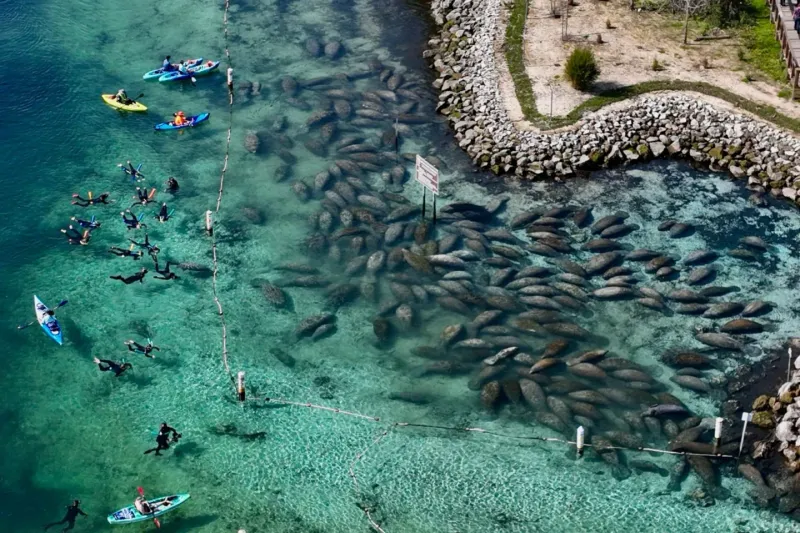
What makes Crystal River genuinely worth the trip is not a particular boat type or a price point. Kings Bay and the surrounding Crystal River National Wildlife Refuge preserve one of Florida’s most significant natural warm-water gathering areas for wild Florida manatees, and the setting is unlike anything a zoo or aquarium can replicate.
The U.S. Fish and Wildlife Service notes that visitors may use their own vessel, rent a kayak or canoe, or book a permitted guided tour to experience the refuge.
A kayak places you at water level rather than looking down from a dock, which changes the scale of the encounter considerably. When a 1,000-pound animal drifts past at arm’s length, the experience is more visceral than any elevated vantage point allows.
According to the refuge’s 2025 information sheet, Kings Bay can support very large winter aggregations, sometimes approaching 1,000 animals during extremely cold stretches. That concentration is what gives Crystal River its reputation as a premier viewing destination.
Crystal River is distinctive for its natural spring habitat and winter numbers, though it is not the only place in Florida where manatees can be observed. FWC lists multiple viewing locations across the state, from Tampa Bay to the Indian River Lagoon.
A clear-bottom kayak adds a viewing panel to the hull, which can reveal what is happening directly beneath the boat when water clarity is good. That feature is a design convenience, not a promise of a controlled or captive interaction.
Manatees move on their own schedule through wild habitat, and no vessel type changes that fundamental reality.
Winter improves viewing odds but adds restrictions
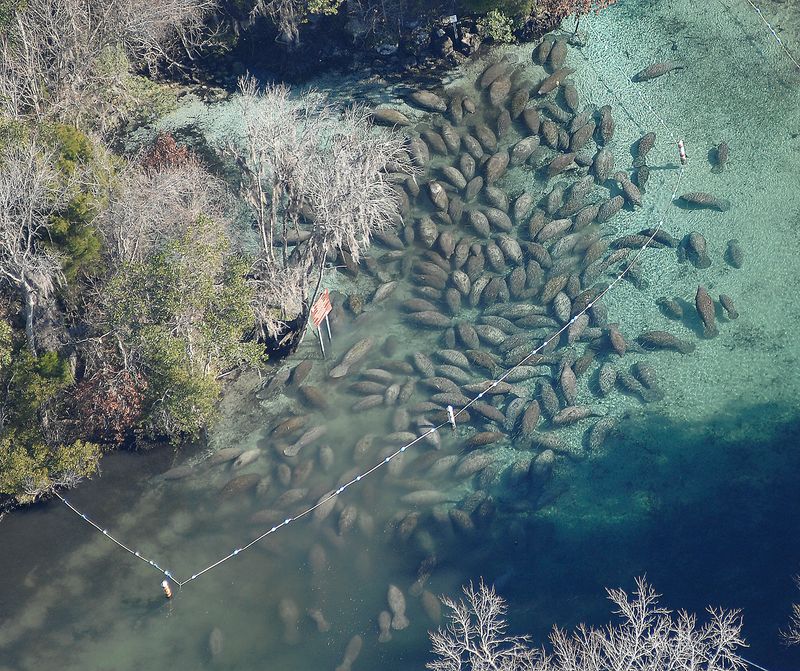
Cold weather and manatee sightings are closely linked in Crystal River. Manatees are warm-blooded and cannot tolerate prolonged exposure to cold water.
FWC notes that manatees seek warm-water refuges when water temperatures drop below about 68 degrees Fahrenheit, which is exactly why Crystal River’s 72-degree springs draw so many animals during Florida’s cooler months.
The refuge’s manatee season runs from November 15 through March 31, and the Crystal River National Wildlife Refuge designates seven Kings Bay sanctuaries as closed to all public activity during that window. Temporary no-entry areas around Three Sisters Springs and other spring runs may also expand during periods when manatees are densely concentrated inside.
Those closures are not bureaucratic inconveniences; they exist because crowding near the springs can interrupt feeding, resting, and calf-nursing behaviors that the animals depend on during cold stress.
One local outfitter notes that during manatee season, paddlecraft remain at the edge of Three Sisters Springs rather than entering the spring run. That is current operator guidance based on seasonal conditions, not a universal route rule that applies year-round or at every spring.
Verify the current access status with your chosen operator before launching, and check directly with the refuge for any temporary closures that may have been added after any article or listing was published.
Warmer months offer a different experience. FWC explains that manatees disperse widely during summer, spreading along Florida’s coasts and rivers as water temperatures rise.
Three Sisters Springs may be open to in-water swimming during summer, but manatee sightings become less predictable because the animals are no longer concentrated by cold. A summer paddle in Crystal River can still be a beautiful outing; just calibrate your expectations around wildlife distribution rather than assuming the winter aggregation numbers apply.
Choose the boat that matches your budget and priorities
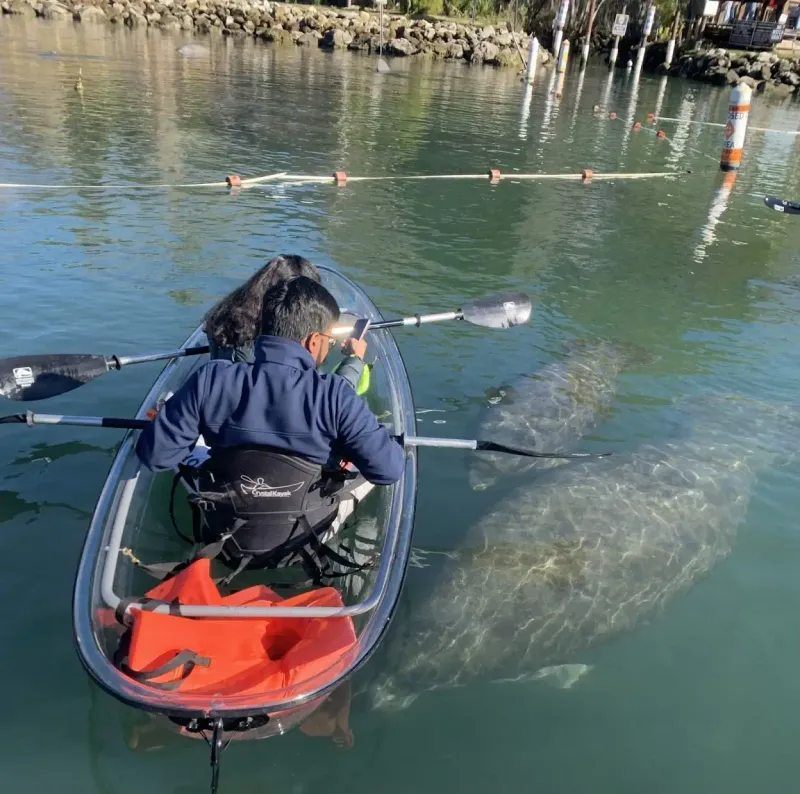
Picking the right vessel comes down to what you actually want from the outing and what you are willing to spend. A standard kayak rental gives you the most affordable entry point, roughly $40 to $50 depending on duration and operator.
You will still be on the same water, in the same habitat, at the same eye level as the animals. The tradeoff is that when a manatee passes beneath your hull, you will not see it through the floor.
A clear-bottom kayak changes that one variable. The documented boats use a clear viewing panel set into an otherwise conventional hull, not an entirely transparent vessel.
Crystal River Kayak Company lists the clear-bottom single at $93 and the double at $113, which is more than double the standard rental price. The premium buys a specific design feature, not a guarantee that manatees will appear beneath the panel on any given day.
Water clarity, animal movement, and weather all affect what the panel actually reveals.
A guided clear-kayak tour is a third option that bundles the clear-bottom boat with a naturalist or guide who knows the waterways. The guided experience is listed at approximately $103 per person for a structured 2.5-to-3-hour outing.
For first-time visitors who are unfamiliar with Kings Bay’s channels, sanctuary boundaries, and wildlife behavior cues, the added guidance can be worth the higher price. Manatee Paddle also offers guided clear-kayak tours, so comparing current availability and pricing across operators before committing makes sense.
The clearest way to choose is to decide your priorities in order. If keeping the total cost as low as possible matters most, a standard rental is the right call.
If watching below the hull is the main draw and the higher price is acceptable, a clear-bottom rental fits. If you want structured wildlife interpretation and route guidance on top of the clear-bottom viewing, a guided tour is the logical match.
Let the manatee determine the distance
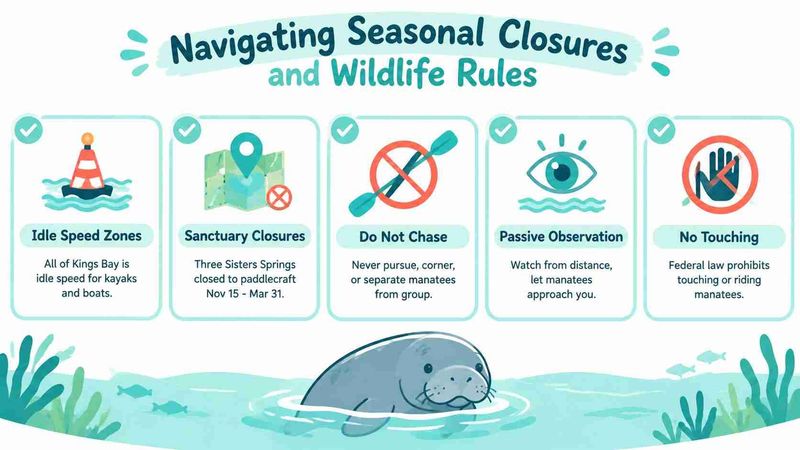
Paddling near wild manatees carries a real responsibility, and the rules exist because the animals are protected under both federal and state law. FWC’s paddler guidelines are specific: do not chase, pursue, or follow a manatee.
Do not touch, feed, water, or attempt to ride one. Do not block a manatee’s path or position yourself between a mother and her calf.
These are not suggestions; violating them can constitute harassment and result in federal or state penalties.
The clearest behavioral signal is the animal’s reaction to you. If a manatee speeds up, changes direction, or dives abruptly after noticing your kayak, you are too close.
The correct response is to stop paddling and let the animal move away, or to back off in the opposite direction. Passive observation means the manatee sets the terms of the encounter, not the paddler.
One specific action that FWC explicitly discourages is paddling over resting manatees. Manatees must surface regularly to breathe, and a kayak positioned directly above a resting animal can startle it and disrupt that cycle.
The goal is to paddle near or alongside manatees, not to position yourself overhead. A manatee may occasionally pass beneath a kayak on its own, but that incidental moment is fundamentally different from a paddler maneuvering to hover above an animal.
Readers should never deliberately create, encourage, or pursue that situation.
Keeping a respectful distance also tends to produce better sightings. Manatees that are not disturbed often surface slowly and repeatedly in the same area, giving observers extended views.
Animals that feel pressured move away quickly and do not return. The most rewarding encounters reported by regular Crystal River paddlers are the ones where the manatee chose to approach on its own terms.
Confirm the booking details before you launch
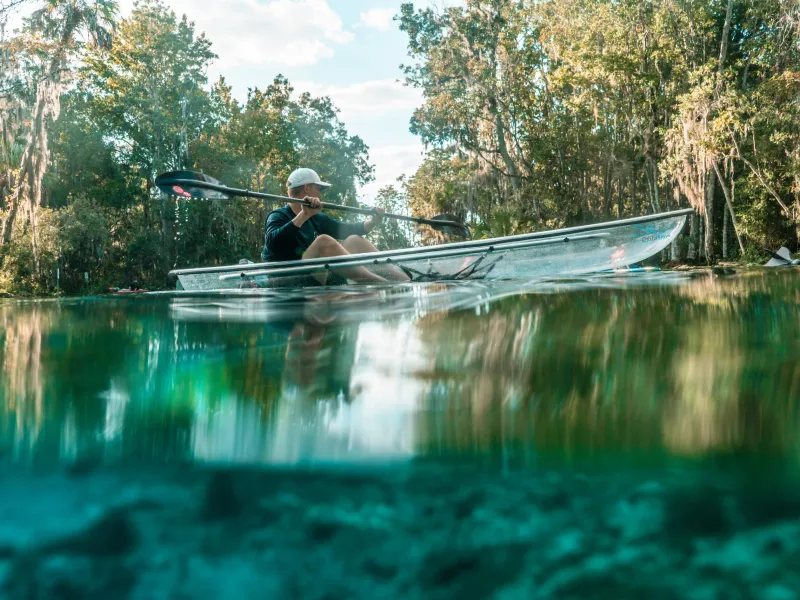
Rental prices, vessel availability, and access rules in Crystal River change with the season and sometimes week to week. Checking a listing once and assuming the details will hold until your visit is the most common planning mistake.
Call or email the operator directly to confirm the current price, the vessel type, the rental duration, and exactly what is included before you commit.
A few specific items are worth verifying for every booking. First, confirm whether the price is per vessel or per person, because a tandem listed at a single rate may cost more per paddler than it appears.
Ask whether paddles, life jackets, and a launch fee are included or billed separately. Crystal River Kayak Company’s rental page is a useful starting point for current pricing, but any detail on that page should be confirmed at the time of booking rather than treated as fixed.
Reservations matter more than many visitors expect. Winter cold snaps that push water temperatures down quickly can concentrate manatees and fill rental slots within hours.
Weekend mornings during peak season are particularly competitive. Most operators in Crystal River require or strongly recommend advance reservations, especially from November through March.
Before launching, check the current access status for Three Sisters Springs and any other areas on your planned route. The refuge’s current information sheet describes the sanctuary boundaries and seasonal rules, and the Crystal River National Wildlife Refuge visitor page can provide updated closure notices.
Temporary no-entry areas can be added on short notice when conditions change.
Wear a properly fitted, U.S. Coast Guard-approved life jacket whenever the kayak is underway.
Coast Guard guidance requires a wearable approved life jacket for each person aboard, and wearing it rather than stowing it is the only version that helps in an emergency. Ask the operator to confirm that life jackets are included in the rental and that the sizes available will fit every member of your group.
The affordable version still offers a genuine wildlife outing
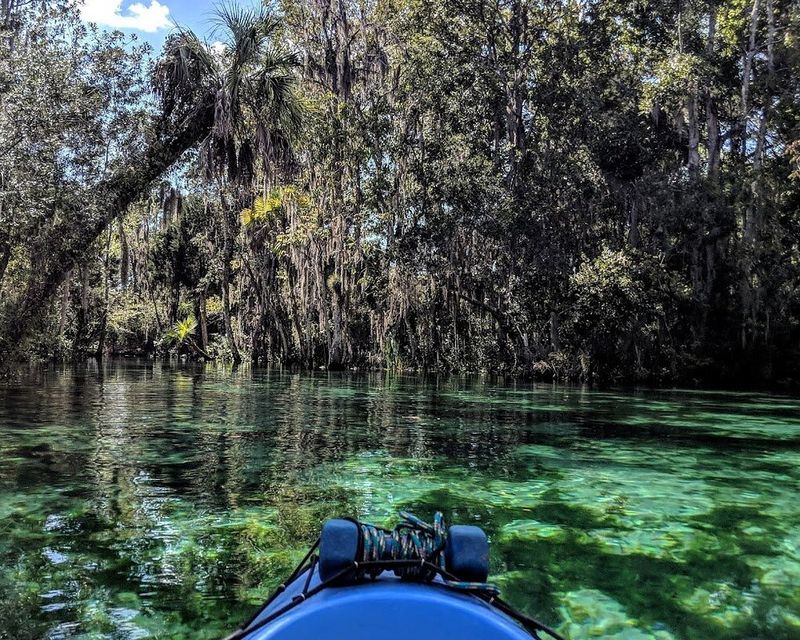
Paddling near wild manatees in Crystal River is a real and accessible experience. Standard single-kayak rentals starting around $40 to $50 put that outing within reach for most day-trippers, and current operator listings confirm those rates for conventional kayaks.
The clear-bottom version costs substantially more, and the available evidence does not support promising that experience for under $50. Treating them as separate products is the honest approach.
Matching the vessel to your actual budget and then verifying the current listing before booking prevents the most common disappointments. Check the refuge’s current activities page for permitted operators and any updated sanctuary or access rules.
Confirm the route, the inclusions, and the reservation policy with the operator directly, and follow FWC’s paddler guidelines once you are on the water.
No booking, vessel type, or price point guarantees a manatee sighting. Winter improves the odds considerably, but wild animals remain unpredictable on any given day.
The experience worth planning for is not a particular overhead view or a specific price; it is time spent on a spring-fed waterway inside a protected natural habitat, where a 1,000-pound animal might decide, entirely on its own terms, to share the water with you.