
Affiliate disclosure: As an Amazon Associate I earn from qualifying purchases. Learn more
Space is all around us, but the way we see and capture it depends entirely on the glass in front of our cameras. Special lenses can bend, stretch, and reshape reality in ways that challenge our everyday perception. From sweeping panoramas to mind-bending curves, these optical tools unlock creative possibilities that redefine how we frame the world.
1. Venus Optics Laowa 15mm f/4 Macro
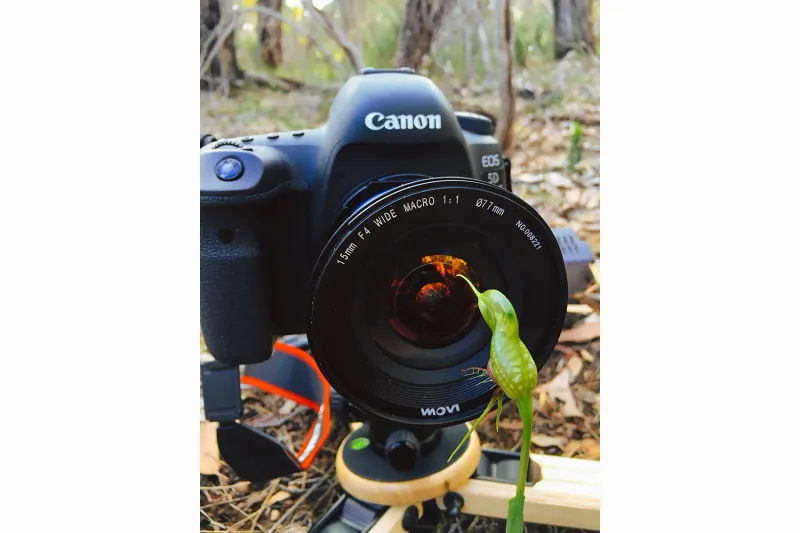
Wide-angle glass usually forces you to choose between capturing a grand scene or zooming in on tiny details. This lens breaks that rule entirely. Venus Optics engineered the Laowa 15mm f/4 Macro to deliver an extremely wide field of view while maintaining a 1:1 magnification ratio at close range.
Imagine photographing a flower with intricate petal textures while still including the sweeping meadow behind it. That dual capability creates spatial effects that feel almost surreal. Your viewer sees both the intimate and the expansive in one frame, challenging traditional ideas of foreground and background.
Photographers exploring environmental portraiture or creative product shots find this combination liberating. You can place your subject against vast backdrops without losing the fine detail that makes close-ups compelling. The result is imagery that feels layered and dimensional, rewriting how we balance scale and intimacy in a single composition.
2. Nikon Tilt-Shift 24mm f/3.5
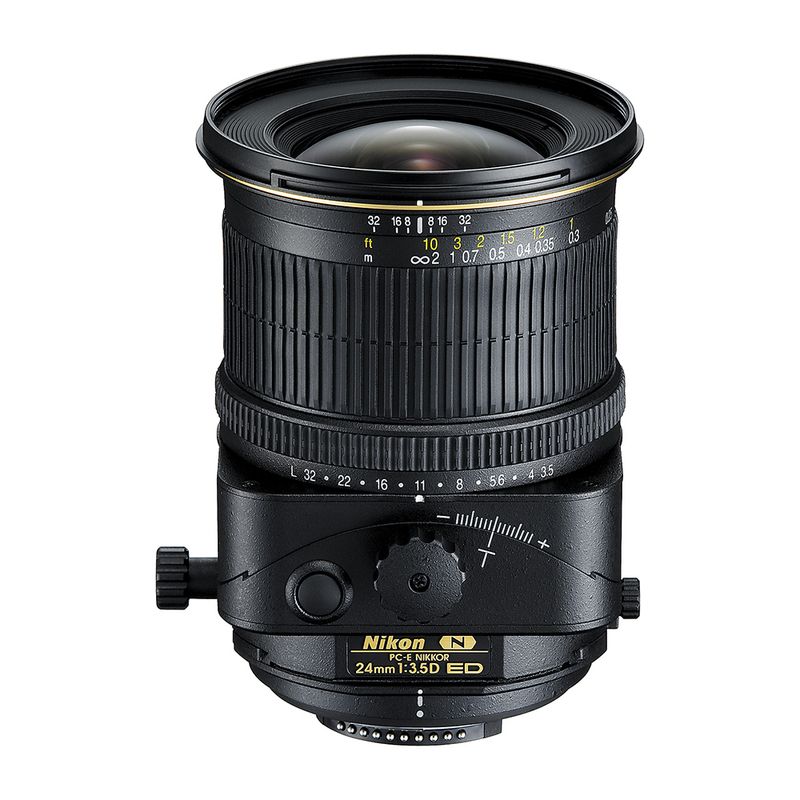
Buildings lean backward in photos because camera sensors sit parallel to the ground. Tilt-shift optics solve this by letting you shift the lens plane independently from the sensor. The Nikon 24mm f/3.5 gives you precise control over perspective correction, keeping vertical lines perfectly straight even when shooting upward.
Beyond architecture, the tilt function manipulates depth of field in unexpected ways. You can create a narrow plane of focus that slices diagonally through a scene, making real-world subjects look like miniature models. This effect, often called the miniature faking technique, plays with our spatial perception in playful ways.
Professional architectural photographers rely on these lenses to maintain geometric integrity. Interior designers use them to showcase rooms without distortion. Creative shooters exploit the tilt function for dreamy, selective-focus portraits that feel otherworldly. The control you gain transforms how you render three-dimensional space onto a flat image plane.
3. Rokinon T/S 24mm f/3.5 ED AS UMC
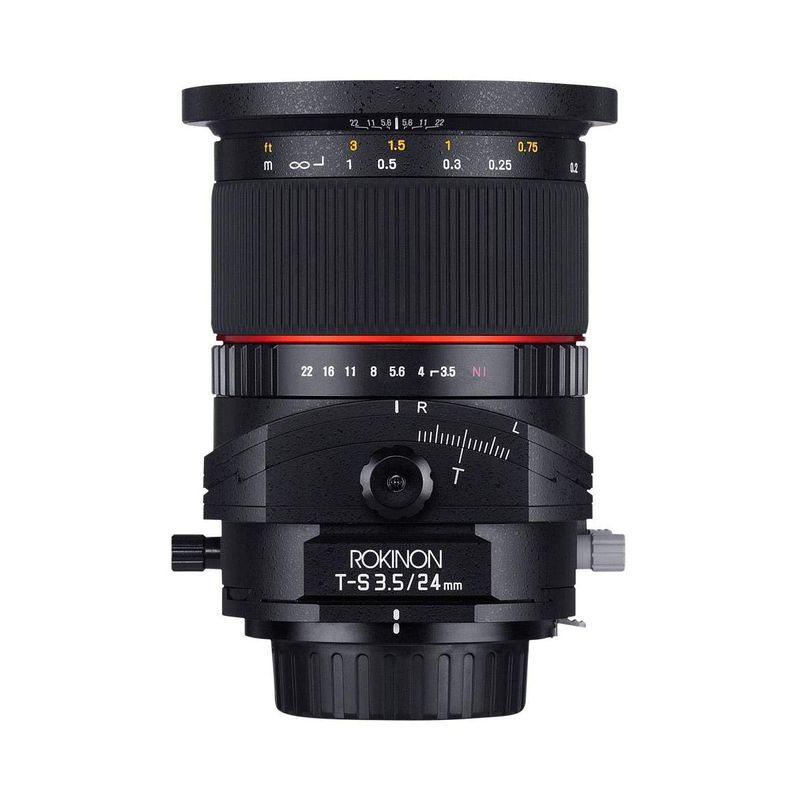
Not everyone can afford high-end tilt-shift glass, but Rokinon offers a budget-friendly gateway into perspective control. This 24mm lens delivers the same fundamental movements as pricier options, letting you keep building lines straight and manipulate focal planes creatively.
Cityscape photographers appreciate how the shift function prevents converging verticals when shooting skyscrapers. Interior shooters use it to capture entire rooms without awkward distortion at the edges. The manual-focus design requires patience, but that slower workflow often leads to more thoughtful compositions.
The tilt mechanism opens up experimental territory. You can angle the plane of focus to emphasize certain elements while throwing others into soft blur, creating spatial drama that standard lenses cannot achieve. For photographers on a budget who want to explore architectural work or creative portraiture, this lens provides essential perspective-control tools without breaking the bank. It proves that rewriting spatial rules does not always require premium pricing.
4. Sigma 10mm f/2.8 EX DC Fisheye
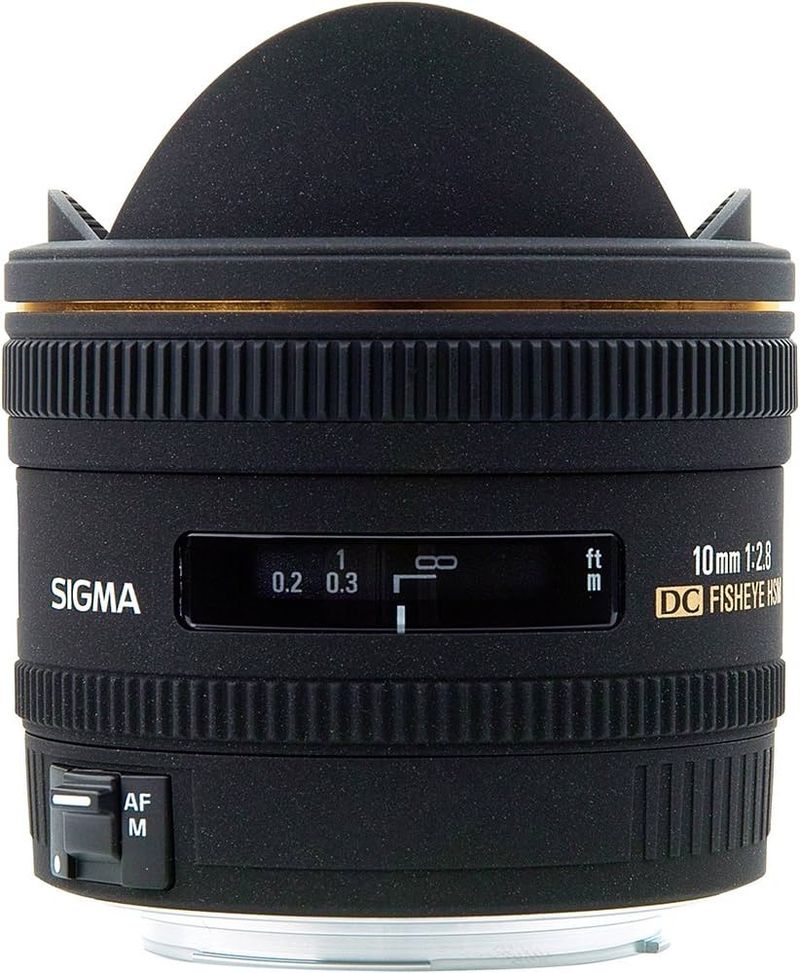
Step into a new dimension where straight lines curve and horizons wrap around the frame. The Sigma 10mm fisheye delivers a 180-degree field of view that bends space in radical ways. Every element in your composition gets pulled into a spherical distortion that challenges how we perceive environments.
Skateboarders and action sports photographers love this lens because it exaggerates movement and makes subjects pop from their surroundings. Landscape shooters use it to create dramatic sky-dominated compositions where clouds seem to swirl overhead. The extreme curvature can feel gimmicky at first, but thoughtful framing turns it into a powerful storytelling tool.
Shooting with a fisheye demands new compositional thinking. You learn to place subjects near the center to minimize distortion or push them to the edges for maximum warp. Architecture becomes sculptural, interiors feel cavernous, and everyday scenes transform into abstract studies of form. This lens does not just capture space; it reimagines it entirely.
5. Pentax DA 10-17mm f/3.5-4.5 Fish-Eye Zoom
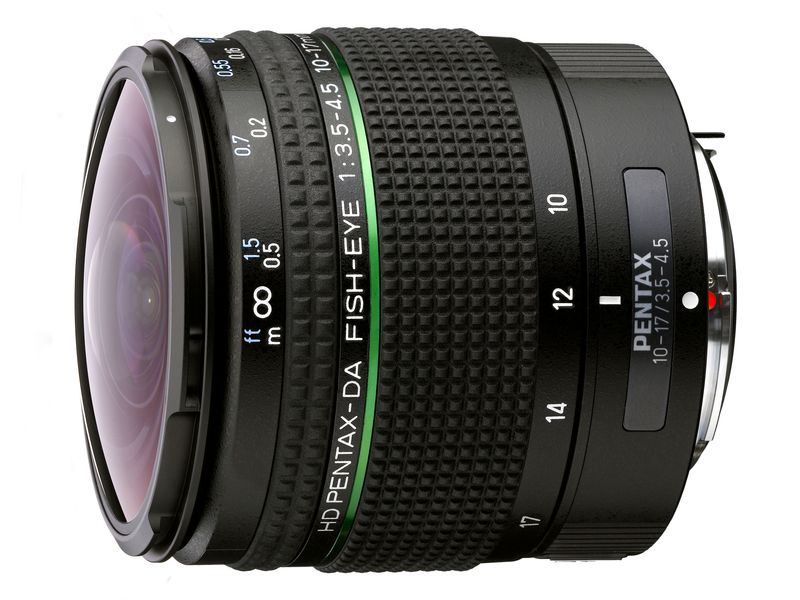
Most fisheye lenses lock you into one focal length, but Pentax built a zoom range into this compact optic. Designed for APS-C cameras, the 10-17mm range lets you dial in just how much spatial distortion you want. At 10mm, you get the full fisheye warp; at 17mm, the effect softens while still delivering an ultra-wide perspective.
This flexibility makes the lens ideal for exploratory shooting. You can experiment with different degrees of curvature without swapping glass. Wildlife photographers use it to capture animals in their expansive habitats with immersive context. Concert and event shooters appreciate how it pulls in entire venues while keeping performers prominent.
The zoom function encourages creative play. You can start with a subtle wide-angle look and push toward extreme distortion as your composition evolves. For Pentax shooters working with crop-sensor bodies, this lens opens up imaginative spatial possibilities that fixed fisheyes cannot match. It is a tool for photographers who want control over how much they bend reality.
6. Nikon Z 14-30mm f/4 S
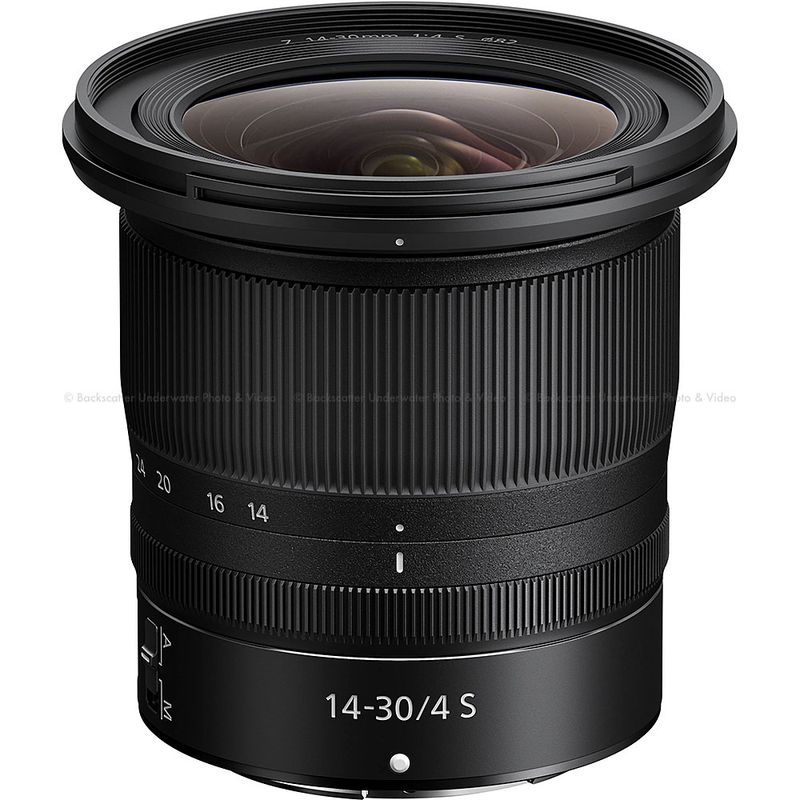
Ultra-wide zooms liberate your compositions by pulling in massive amounts of visual information. The Nikon Z 14-30mm f/4 S captures sweeping landscapes and expansive architectural scenes with minimal distortion, thanks to advanced optical corrections. At 14mm, you can stand in the middle of a canyon and include both towering walls in a single frame.
Mirrorless design allowed Nikon to build this lens remarkably compact for its range. Travel photographers appreciate the light weight when hiking to remote locations. Real estate shooters use it to make interiors feel spacious and inviting. The constant f/4 aperture keeps exposure consistent as you zoom, simplifying workflow in changing light.
Working at these focal lengths forces you to think differently about composition. Foreground elements become crucial anchors, and you learn to use leading lines that draw viewers deep into the frame. Sky and ground occupy more of your image, so every element must earn its place. This lens expands your spatial context dramatically, encouraging environmental storytelling that places subjects within their full surroundings.
7. Sony FE 20mm f/1.8 G
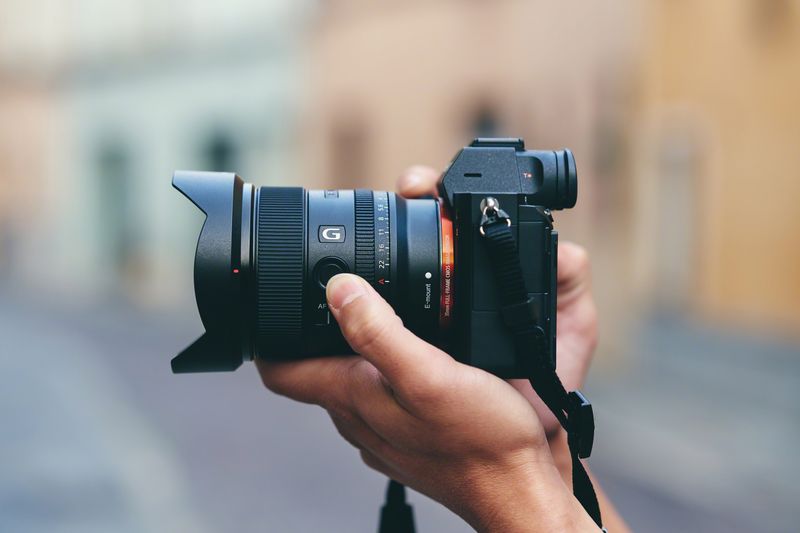
Wide-angle primes usually sacrifice aperture width for optical quality, but Sony combined both in the FE 20mm f/1.8 G. That fast maximum aperture gives you creative control over depth of field while still capturing expansive environmental context. You can isolate a subject against a softly blurred cityscape or keep everything sharp from foreground to infinity.
Astrophotographers favor this lens for its light-gathering ability under dark skies. Street photographers use the 20mm perspective to create dynamic compositions that feel immersive without the exaggeration of wider glass. The combination of width and speed lets you push the sense of space while maintaining subject separation.
Low-light performance sets this lens apart. At f/1.8, you can shoot handheld in dim interiors or during blue hour without cranking ISO into noisy territory. The optical design minimizes aberrations and maintains sharpness across the frame. For Sony shooters who want a versatile wide prime that balances environmental storytelling with selective focus, this lens rewrites what you can achieve in challenging lighting and tight spaces.
8. Fujifilm XF 10-24mm f/4 R OIS WR
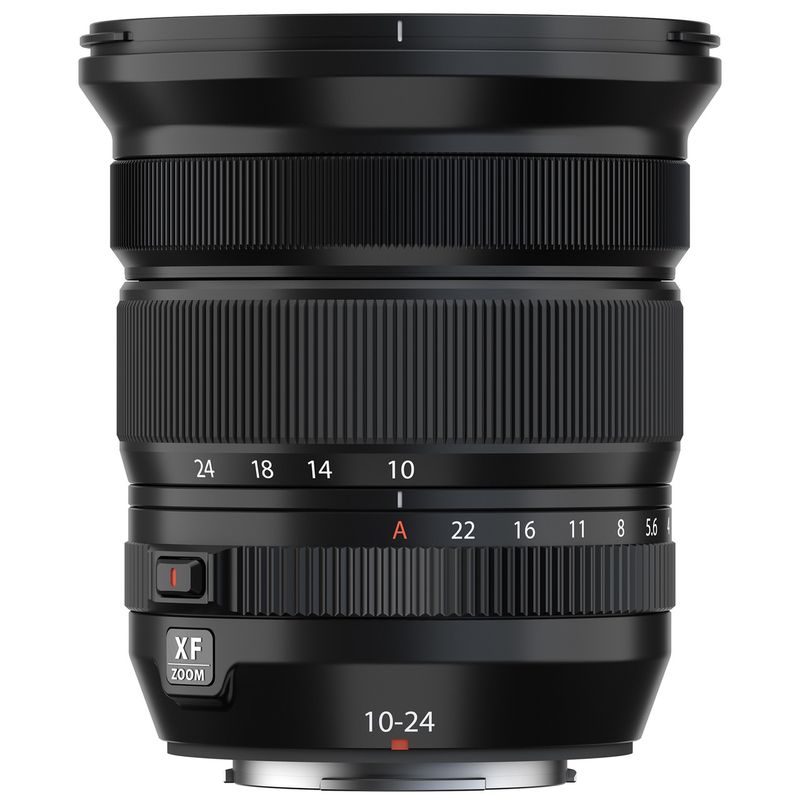
Fujifilm designed this zoom specifically for their APS-C X-series cameras, delivering an equivalent range of roughly 15-36mm in full-frame terms. That ultra-wide starting point opens up compositions that feel liberated and expansive. Weather sealing and optical image stabilization make it a reliable companion for outdoor adventures where conditions change quickly.
Landscape photographers rely on the 10mm end to capture vast vistas with dramatic foreground interest. Travel shooters use the zoom range to frame everything from tight alleyways to open plazas without swapping lenses. The constant f/4 aperture simplifies exposure management, and the stabilization helps when shooting handheld at slower shutter speeds.
Working with this focal range teaches you to embrace negative space and use it purposefully. You learn how much sky enhances a scene versus overwhelming it. Architecture becomes more dynamic as converging lines pull the eye upward. The lens encourages you to define more of a scene in dramatic fashion, rewriting your approach to environmental composition and spatial relationships within the frame.
9. Tamron 11-20mm f/2.8 Di III-A RXD
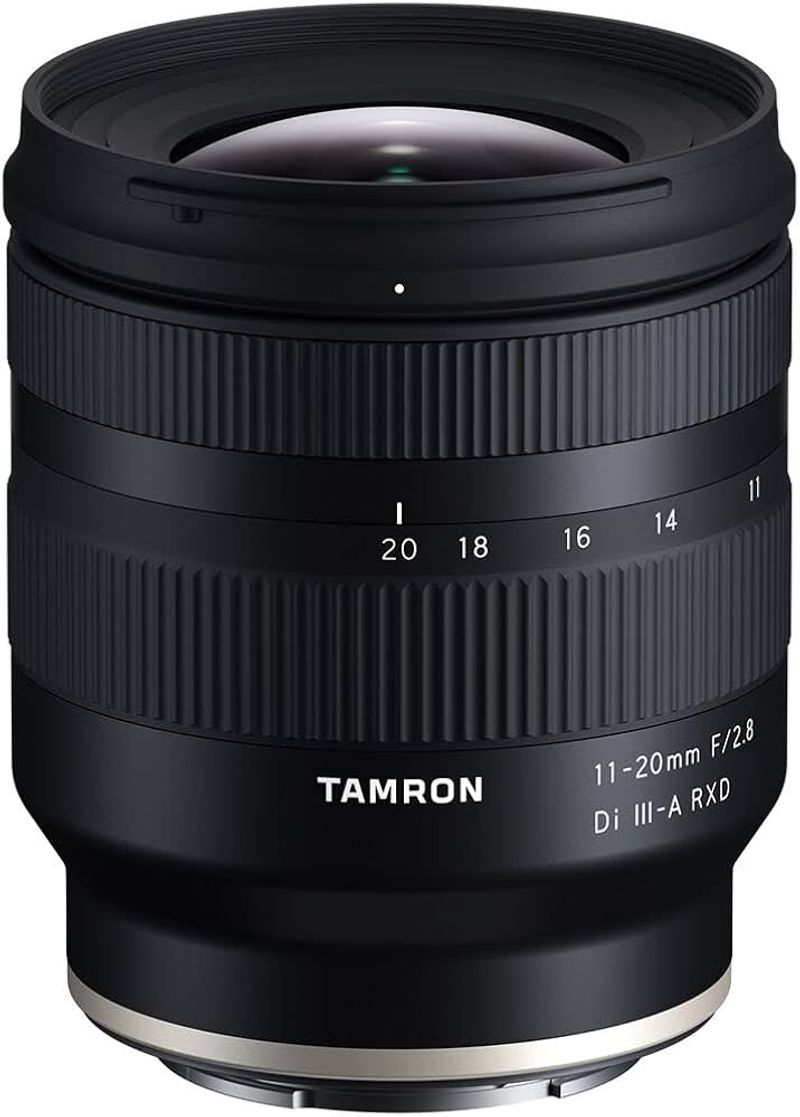
Ultra-wide zooms with constant f/2.8 apertures used to be bulky and expensive. Tamron changed that equation with the 11-20mm Di III-A, delivering professional-grade speed in a compact package for APS-C mirrorless systems. Night cityscape photographers love how the fast aperture lets them capture urban environments handheld without excessive noise.
Interior shooters use this lens to make tight spaces feel open and inviting. The 11mm starting point pulls in entire rooms, while the f/2.8 aperture allows for creative depth-of-field control even in dim lighting. Event photographers appreciate the zoom range for framing group shots and environmental portraits without constantly changing position.
The constant aperture throughout the zoom range means your exposure stays consistent as you adjust framing. This simplifies workflow during fast-paced shoots where lighting conditions shift rapidly. For photographers who want expressionistic wide frames with the flexibility to control depth and light, this lens delivers professional capability at a surprisingly accessible price point. It proves that rewriting spatial boundaries does not require flagship budgets.
10. Ultra-Wide Tilt and Zero-Distortion Lenses
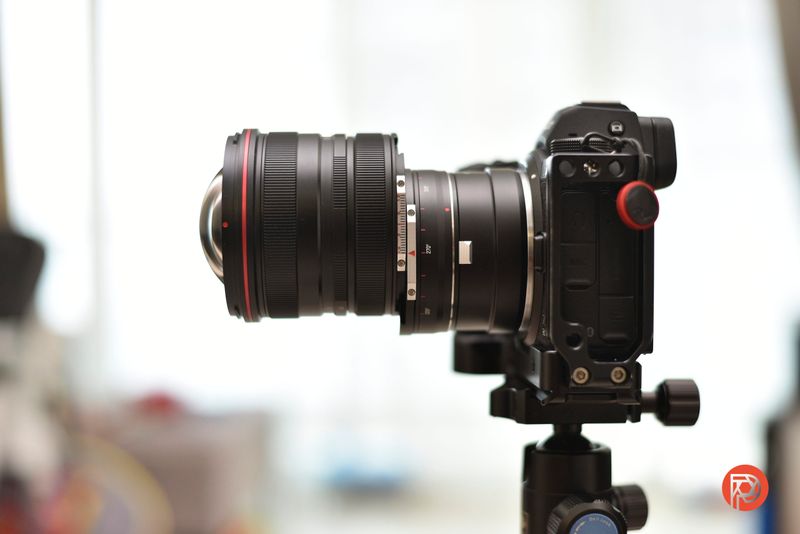
Some lenses combine multiple spatial-control technologies into one tool. The Venus Laowa 15mm Zero-D Shift exemplifies this category, pairing an ultra-wide field of view with shift movements and near-zero distortion. Architectural photographers can capture entire building facades with straight lines and no barrel distortion, maintaining geometric accuracy that standard wide-angles cannot achieve.
Interior designers use these lenses to showcase spaces honestly, without the exaggerated perspectives that can mislead clients. Real estate photographers rely on the shift function to correct converging verticals without cropping away valuable image area. The zero-distortion design means straight edges remain straight, even at the frame borders.
These specialty lenses demand technical understanding and careful setup, but the results justify the effort. You gain control over how three-dimensional space translates onto your sensor, maintaining straight lines while still capturing dramatic environmental context. For professionals who need optical precision combined with expansive coverage, these lenses represent the ultimate tool for rewriting spatial relationships in architectural and environmental imagery.