
Affiliate disclosure: As an Amazon Associate I earn from qualifying purchases. Learn more
Long-distance hiking can be incredibly rewarding, but it also takes a serious toll on your body. Without the right gear, even experienced hikers can find themselves exhausted, sore, and struggling to finish the trail. The good news is that having the right equipment can make all the difference between a painful slog and an enjoyable adventure.
1. Trekking Poles (Black Diamond Trail Back / Leki Makalu Lite)
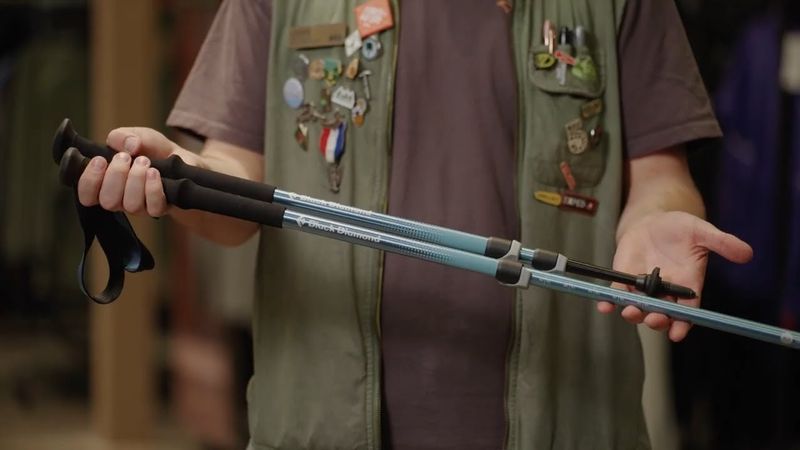
Think of trekking poles as giving yourself an extra set of legs. When you’re climbing steep sections or navigating tricky descents, these tools transfer some of your body weight from your legs to your arms and shoulders. That means less pounding on your knees with every step.
Balance becomes much easier with poles in hand, especially when crossing streams or walking on uneven ground. You’ll notice the difference most dramatically on downhill sections, where your knees would normally absorb tremendous impact. Poles catch you before you stumble and distribute that shock across four contact points instead of two.
Popular models like the Black Diamond Trail Back or Leki Makalu Lite offer adjustable lengths and comfortable grips. Many hikers report finishing long trails with significantly less joint pain when using poles consistently. The energy you save adds up mile after mile, keeping you fresher for the entire journey.
2. Supportive Hiking Shoes (Salomon X Ultra / Merrell Moab / Hoka Anacapa)
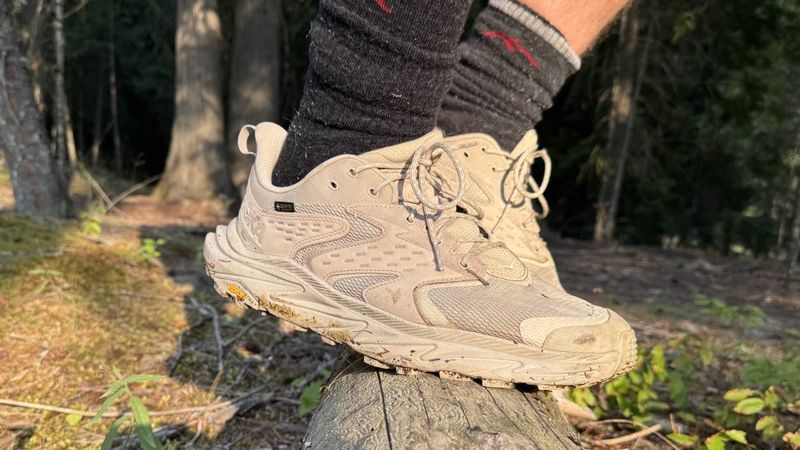
Your feet are your engine on the trail, and worn-out or poorly designed shoes will shut that engine down fast. Quality hiking footwear with proper cushioning acts like shock absorbers for your entire body. Every rock, root, and uneven surface sends vibrations up through your legs, but good shoes soften that impact dramatically.
Stability features in boots like the Salomon X Ultra or Merrell Moab keep your ankles from rolling on tricky terrain. This protection prevents injuries and reduces the constant micro-adjustments your muscles make to keep you upright. Those small corrections drain energy quickly over miles of hiking.
The Hoka Anacapa and similar models offer extra cushioning that feels almost bouncy underfoot. This responsive padding returns energy with each step rather than absorbing it. Breaking in your shoes before a long hike is essential, ensuring they mold to your unique foot shape and prevent hot spots that lead to blisters.
3. Lightweight Backpack with Proper Suspension (Osprey Talon / Deuter Futura)
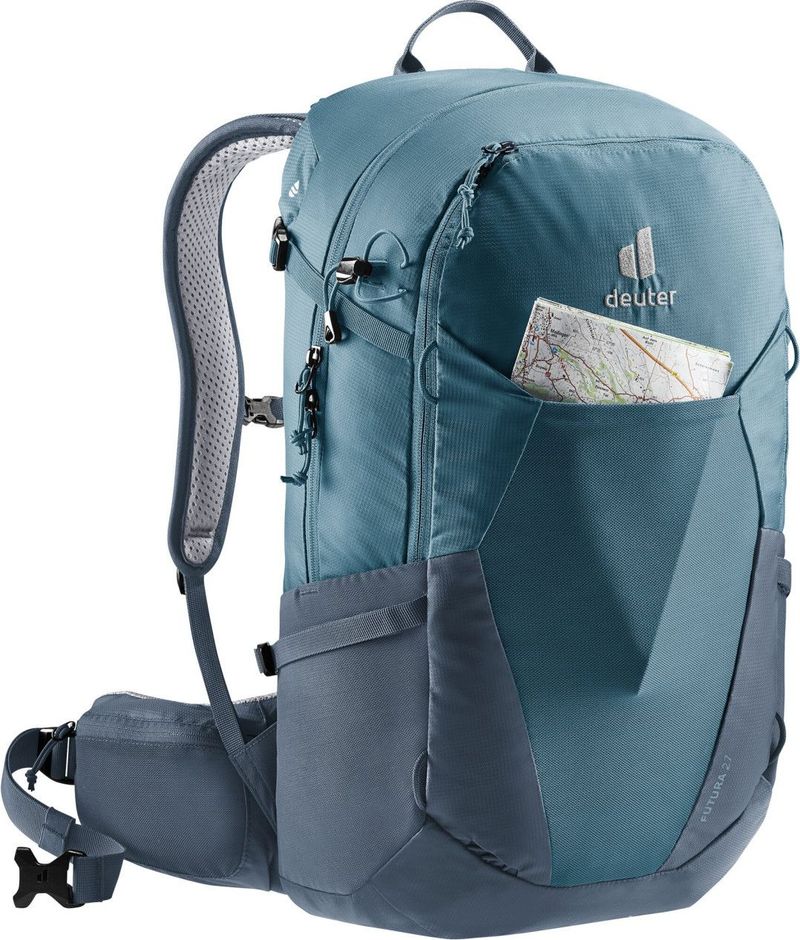
Carrying weight incorrectly turns every step into a battle against gravity and poor engineering. A backpack with quality suspension, like the Osprey Talon or Deuter Futura, changes everything about how weight rides on your body. The hip belt should carry most of the load, transferring weight to your strong leg muscles instead of your shoulders and back.
Proper adjustment makes a huge difference in comfort levels. When fitted correctly, the pack almost becomes part of your body rather than something you’re fighting against. Padded shoulder straps, ventilated back panels, and load-lifter straps all work together to distribute pressure evenly.
Weight savings matter tremendously on long trails. Every unnecessary pound multiplies over thousands of steps, draining your energy reserves. Modern lightweight packs use strong materials that weigh far less than older designs. Combined with smart packing techniques, a good suspension system can make a 30-pound load feel like 20, preserving your strength for the miles ahead.
4. Moisture-Wicking Base Layer (Smartwool Merino / Icebreaker / Decathlon Forclaz)

Sweat is your body’s cooling system, but when it soaks into cotton and stays against your skin, it becomes an energy vampire. Moisture-wicking fabrics like merino wool pull perspiration away from your body and spread it across the fabric surface where it can evaporate quickly. This process keeps your core temperature stable whether you’re climbing in hot sun or hiking through cool morning air.
Brands like Smartwool, Icebreaker, and Decathlon Forclaz specialize in base layers that work hard. Merino wool naturally resists odors, so you can wear the same shirt for multiple days without becoming offensive to fellow hikers. The fabric also regulates temperature beautifully, keeping you warm when it’s cold and cool when it’s hot.
When your body doesn’t have to work overtime managing temperature swings, you conserve precious energy. Staying dry prevents the dangerous chill that happens when you stop moving after sweating heavily. That comfort translates directly into better endurance on long trails.
5. Cushioned Hiking Socks (Darn Tough / Smartwool / Bridgedale)
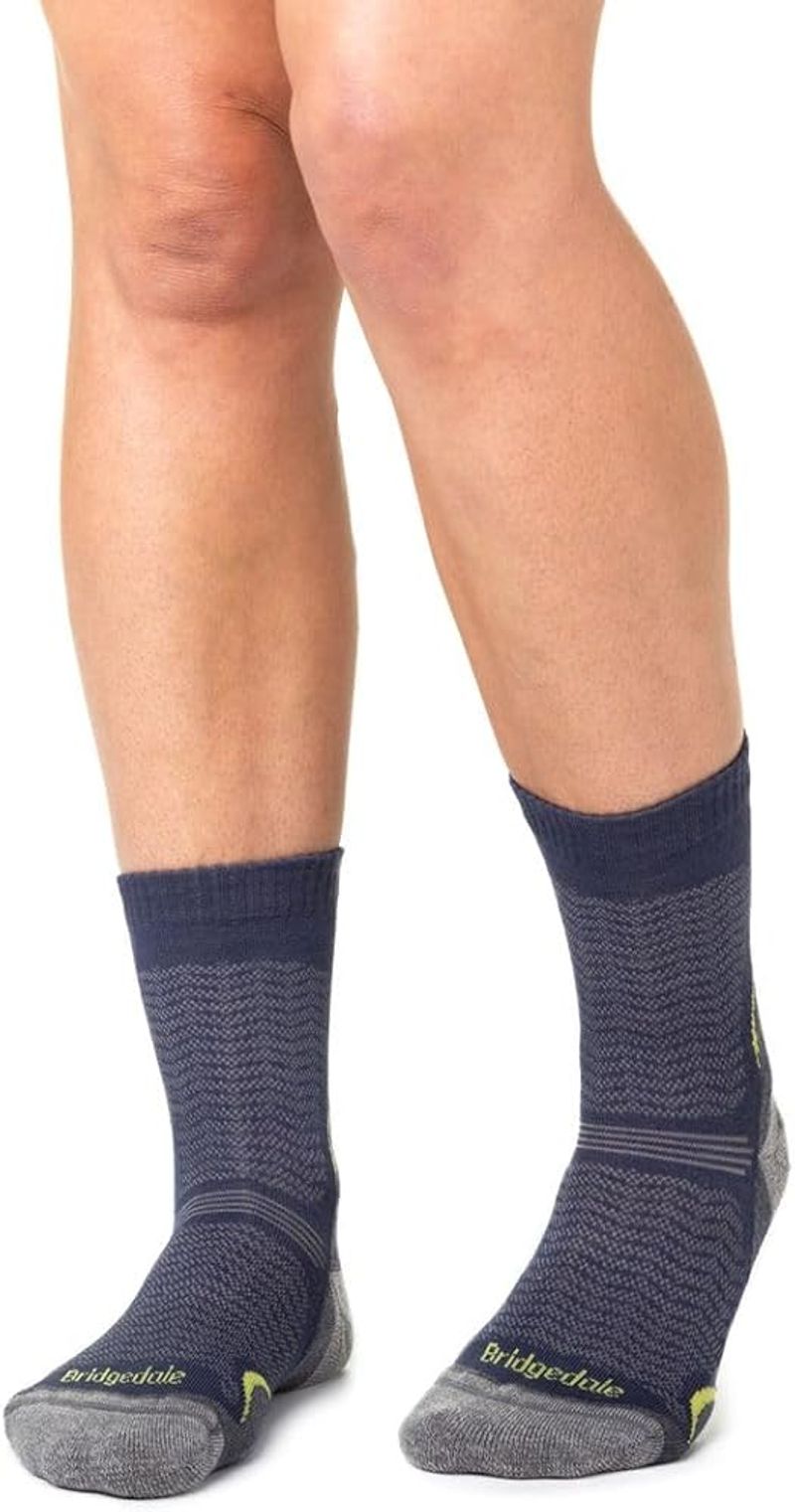
Blisters can end a hiking trip faster than almost any other problem. Quality socks create a protective barrier between your skin and your boots, reducing the friction that causes those painful bubbles. Brands like Darn Tough, Smartwool, and Bridgedale engineer their socks with extra padding in high-impact zones like heels and balls of feet.
The cushioning does more than prevent blisters. It absorbs shock with every step, reducing fatigue in your feet, ankles, and lower legs. Over a ten-mile hike, that adds up to thousands of micro-impacts that your socks handle instead of your body.
Merino wool socks regulate temperature and wick moisture away from skin. They stay comfortable in both hot and cold conditions, adapting to whatever the trail throws at you. Many premium hiking socks come with lifetime guarantees because manufacturers know they’re built to last. Investing in several pairs means you’ll always have dry, fresh socks available, which is crucial for multi-day treks.
6. Hydration System or Lightweight Water Bottles (Camelbak / Platypus / Hydrapak)
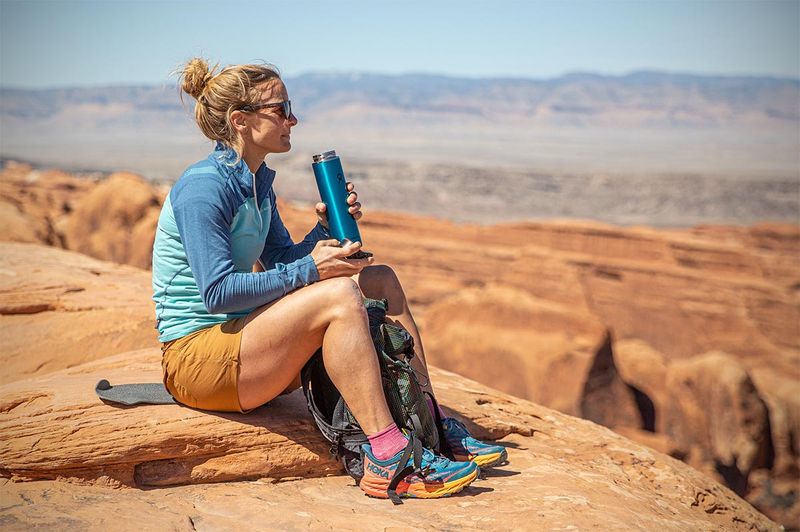
Dehydration sneaks up on hikers, gradually sapping strength and mental clarity before you realize what’s happening. Having water easily accessible encourages you to drink small amounts frequently, which is far better than waiting until you’re desperately thirsty. Hydration systems from Camelbak, Platypus, or Hydrapak let you sip without breaking stride or removing your pack.
The convenience factor cannot be overstated. When drinking requires stopping, digging through your pack, and unscrewing a bottle cap, you’ll naturally drink less often. A hydration tube that stays within easy reach means you’ll maintain proper hydration throughout the day.
Proper hydration affects everything from muscle function to your body’s ability to regulate temperature. Even mild dehydration reduces endurance significantly and makes every hill feel steeper. Lightweight water bottles work great too, especially when paired with accessible side pockets. The key is finding a system that makes drinking effortless, so you’ll actually do it regularly enough to stay properly hydrated.
7. Electrolyte Supplements (Nuun / Skratch Labs / Precision Hydration)
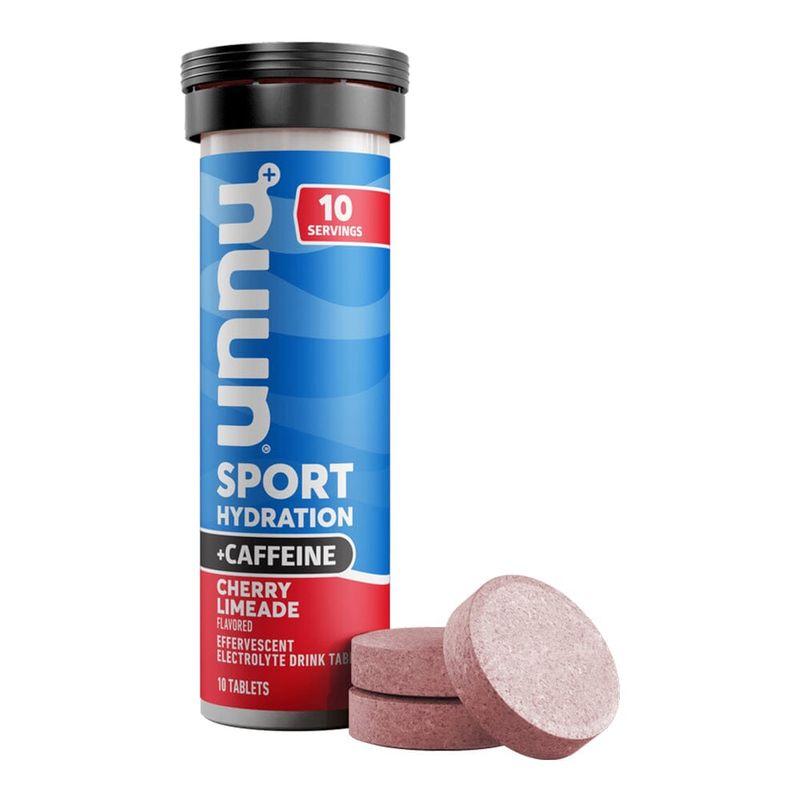
Water alone doesn’t tell the whole hydration story. When you sweat heavily during a long hike, you lose crucial salts and minerals that water can’t replace. Sodium, potassium, and magnesium all play vital roles in muscle function and energy production. Without them, you can drink plenty of water and still feel weak and crampy.
Electrolyte supplements like Nuun tablets, Skratch Labs mixes, or Precision Hydration powders restore what sweat takes away. They dissolve quickly in your water bottle, adding essential minerals without heavy sugar loads that can cause energy crashes. Many hikers notice they can push harder and longer when their electrolyte balance stays steady.
Cramping often signals electrolyte depletion rather than simple dehydration. Adding these supplements prevents that painful seizing of muscles that can stop you in your tracks. The flavoring also makes water more appealing, encouraging you to drink more. For hot weather hiking or anyone who sweats heavily, electrolytes become absolutely essential for maintaining performance throughout the day.
8. Lightweight Insulating Layer (Patagonia Nano Puff / Decathlon Trek 100 Down)
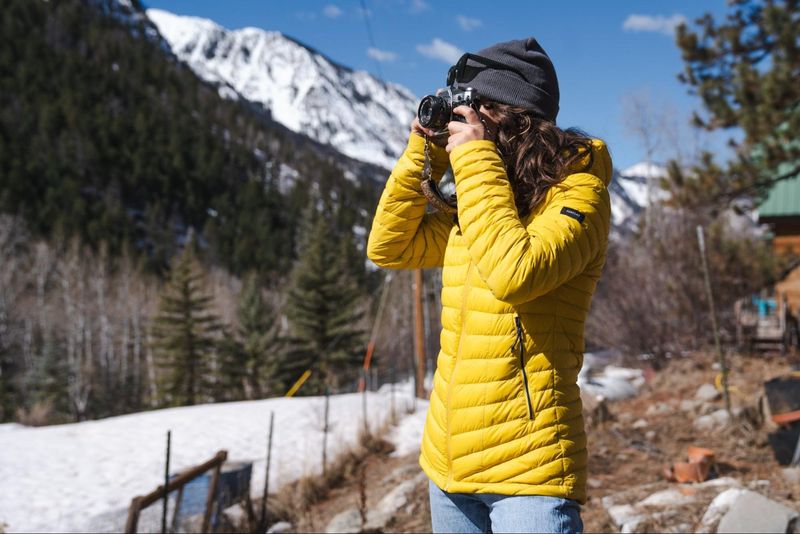
Your body burns tremendous calories just trying to stay warm when temperatures drop. Carrying a lightweight insulating layer like the Patagonia Nano Puff or Decathlon Trek 100 Down protects your energy reserves when weather shifts unexpectedly. Mountain conditions can change rapidly, turning a warm morning into a chilly afternoon with little warning.
Modern insulation technology packs incredible warmth into amazingly small packages. These jackets stuff into their own pockets, taking up minimal pack space until you need them. When you stop for breaks, your body temperature drops quickly as sweat evaporates and wind cuts through thinner layers.
Putting on an insulating layer during rest stops keeps your muscles warm and ready to go. Cold muscles work less efficiently and are more prone to injury. The weight-to-warmth ratio of quality insulating layers makes them essential gear rather than optional luxury. Synthetic insulation like Nano Puff works even when damp, while down offers unbeatable warmth for its weight in dry conditions. Either way, staying warm means staying strong for the long haul.
9. Sun Protection Gear (Wide-Brim Hat, Sunglasses, UPF Shirt)
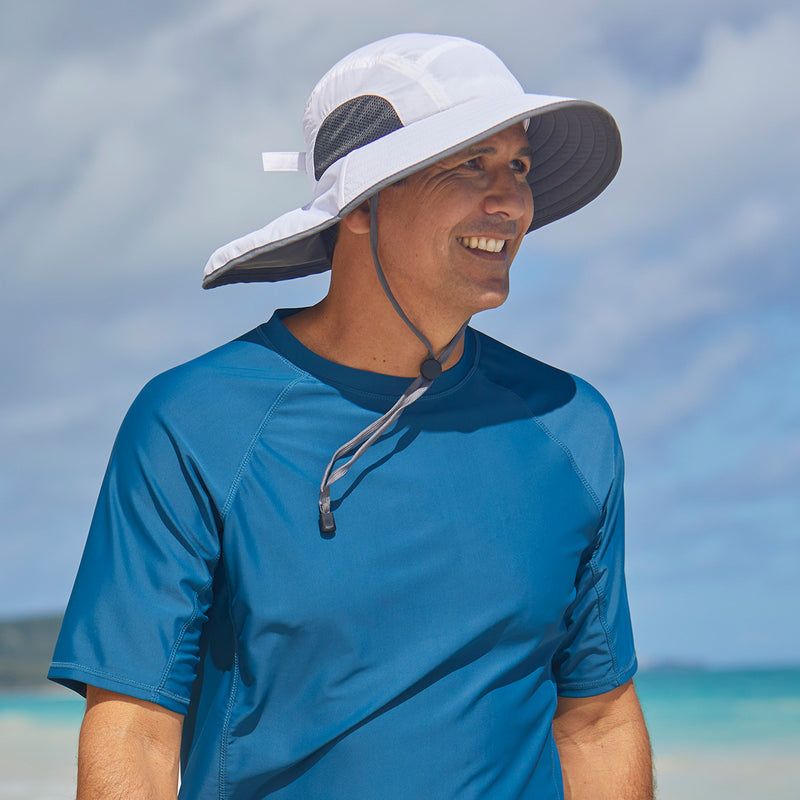
Prolonged sun exposure does more than cause sunburn. It forces your body to work overtime managing heat, which drains energy fast. A wide-brim hat shades your face and neck, reducing the solar load your body must cope with. This simple piece of gear can lower your perceived exertion significantly on exposed trails.
Quality sunglasses protect your eyes from harmful UV rays while reducing squinting and eye strain. When you’re not constantly fighting glare, you’ll notice less facial tension and fewer headaches. UPF-rated shirts add another layer of defense, blocking sun before it reaches your skin.
Heat exhaustion develops when your cooling system gets overwhelmed. Sun protection gear helps prevent this dangerous condition by reducing the amount of heat your body absorbs in the first place. You’ll stay cooler, need less water, and maintain energy levels far better than hiking in regular clothes. On high-altitude or desert trails where shade is scarce, comprehensive sun protection becomes absolutely critical for completing long distances safely and comfortably.
10. Energy-Dense Snacks (Trail Mix, Energy Bars, Nut Butter Packs)
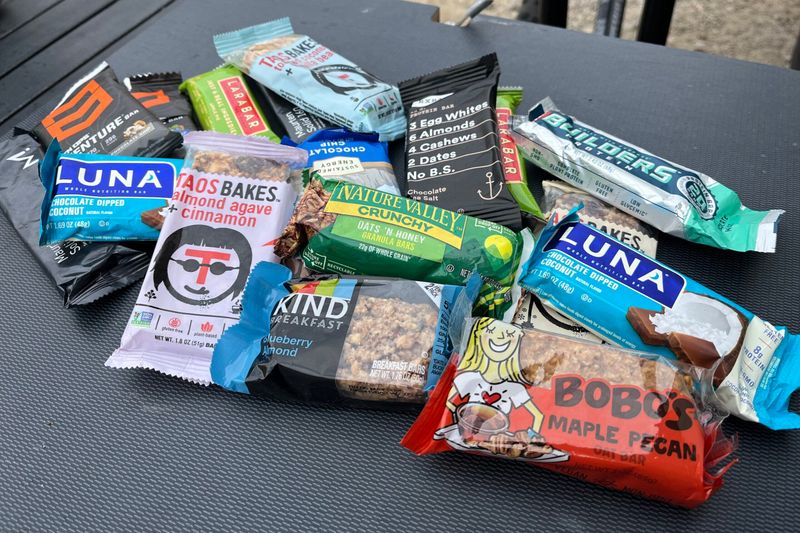
Bonking is what hikers call hitting the wall when your blood sugar crashes. One minute you’re hiking strong, the next your legs feel like lead and every step becomes a struggle. Carrying energy-dense snacks and eating them regularly prevents this miserable experience. Trail mix, energy bars, and nut butter packs deliver quick fuel your body can use immediately.
The key is eating before you feel hungry. Waiting until you’re starving means you’ve already depleted your energy reserves. Small snacks every hour or so maintain steady blood sugar levels and keep your muscles supplied with fuel. Nuts provide healthy fats for sustained energy, while dried fruit offers quick-burning carbohydrates.
Energy bars pack maximum calories into minimal weight and space. Nut butter packets deliver protein and fat in convenient, no-mess portions. The variety also helps because eating becomes harder when you’re tired, and having options you actually want to eat makes a difference. Proper fueling might be the single most important factor in preventing fatigue on long trails.
11. Shock-Absorbing Insoles (Superfeet / Currex / SOLE)
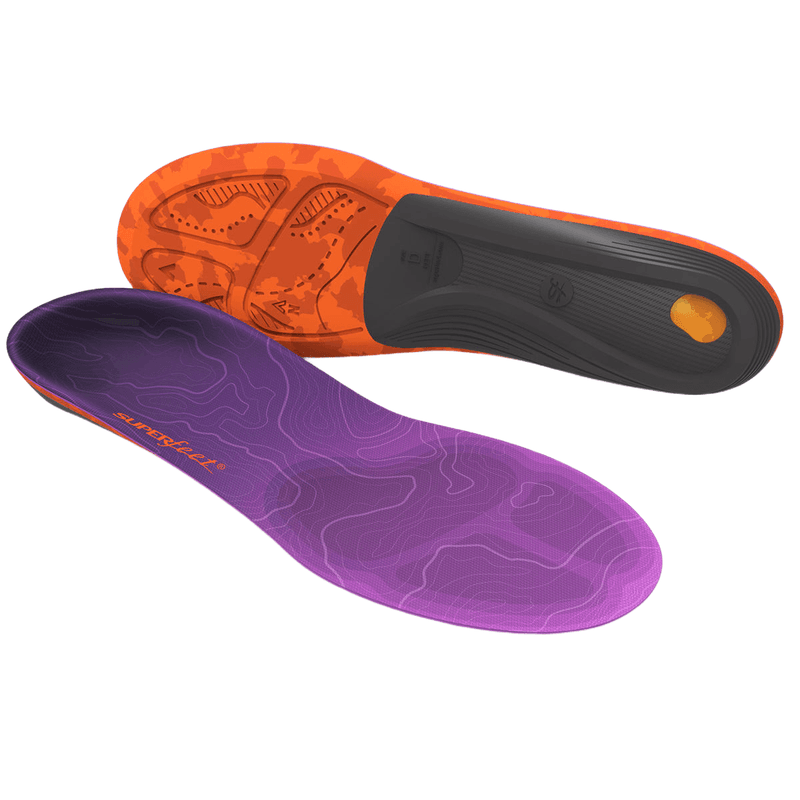
Even the best hiking boots often come with mediocre insoles. Upgrading to quality shock-absorbing insoles from brands like Superfeet, Currex, or SOLE transforms how your boots feel and perform. These insoles provide arch support that aligns your entire body, reducing strain from your feet all the way up through your knees, hips, and back.
Every step on the trail sends impact forces through your body. Quality insoles absorb and distribute these forces, preventing the cumulative damage that leads to fatigue and pain. Proper arch support also improves your walking efficiency, meaning you use less energy to cover the same distance.
Many hikers discover that foot pain they thought was normal completely disappears with better insoles. The cushioning reduces hot spots and pressure points that develop during long days. Different insole brands offer various arch heights and cushioning levels, so finding the right match for your foot shape makes a noticeable difference. This relatively inexpensive upgrade delivers benefits that rival spending hundreds on new boots.
12. Lightweight Rain Shell (Patagonia Torrentshell / Outdoor Research Helium)
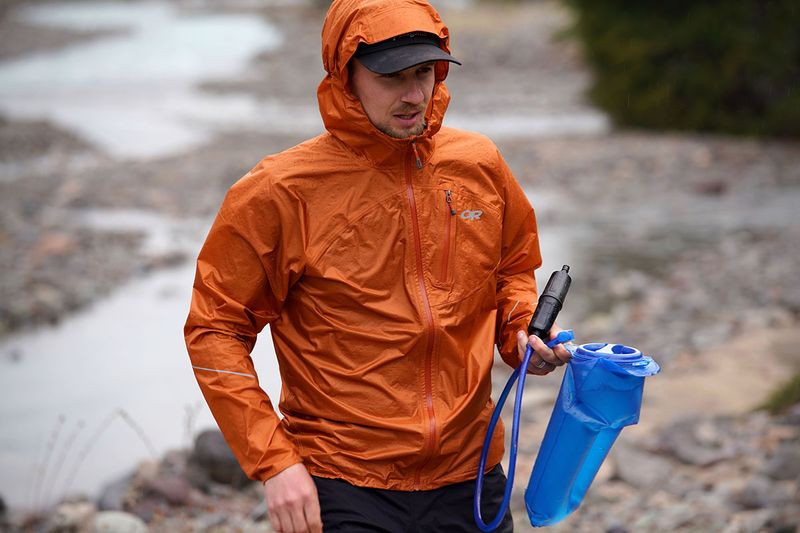
Getting soaked on the trail isn’t just uncomfortable, it’s dangerous and exhausting. When your clothes become waterlogged, your body must burn extra calories to maintain core temperature. A lightweight rain shell like the Patagonia Torrentshell or Outdoor Research Helium weighs just ounces but provides crucial protection when weather turns wet.
Modern rain shells use breathable waterproof fabrics that keep rain out while allowing sweat vapor to escape. This balance prevents the clammy feeling of older rain gear that trapped moisture inside. Staying dry means staying warm, which preserves energy for hiking rather than wasting it on temperature regulation.
Hypothermia can develop even in moderate temperatures when you’re wet and exposed to wind. A good rain shell blocks both water and wind, creating a protective microclimate around your body. Many lightweight shells pack into their own pockets, making them easy to carry every day even when skies look clear. Mountain weather changes quickly, and having rain protection readily available means you won’t hesitate to put it on at the first drops.