
Affiliate disclosure: As an Amazon Associate I earn from qualifying purchases. Learn more
Whether you are stepping into the woods for your first hunt or you have decades of experience under your belt, having the right gear can make all the difference between a safe, successful outing and a dangerous, frustrating one. The equipment you carry protects you from accidents, helps you navigate unfamiliar terrain, and ensures you can ethically harvest and care for game. This guide covers the must-have items that belong in every hunter’s pack, from safety basics to field-dressing tools.
1. Full-body safety harness (plus lifeline) if you use a treestand

Treestand falls remain the leading cause of hunting injuries every single year, yet most are entirely preventable with the right equipment. A quality fall-arrest harness wraps around your torso and legs, distributing impact forces across your body if you slip.
Stay clipped in from the moment your boots leave the ground until you are safely back down. Use a lifeline or climbing system so you never have to unclip mid-climb.
State wildlife agencies and national safety organizations repeatedly emphasize harness use and haul lines for gear instead of climbing with heavy packs. Investing in a certified harness and practicing with it before opening day can literally save your life.
2. Blaze-orange (or blaze-pink) outerwear

Visibility in the field is not just smart; in many places it is the law. Blaze orange or blaze pink outerwear makes you instantly recognizable to other hunters, dramatically reducing the risk of tragic mistaken-identity accidents.
Requirements vary widely state by state. Some demand a certain square footage of fluorescent color above the waist, others specify headgear, and a few have no rule at all during archery season.
Always check your local regulations before heading out. Even if your state does not mandate it, wearing high-vis clothing is a simple, proven way to keep yourself seen and safe when firearms are in use around you.
3. Hearing protection (earplugs or electronic muffs)

A single gunshot can deliver sound levels high enough to cause permanent, irreversible damage to the delicate structures inside your ears. Noise-induced hearing loss does not heal, and repeated exposure only makes it worse over time.
Foam earplugs are lightweight and cheap, but electronic muffs offer a major advantage: they amplify quiet sounds like footsteps or rustling leaves while instantly blocking loud bangs. That means you stay aware of your surroundings without sacrificing your hearing.
Pack your protection in an easy-to-reach pocket and actually use it every time you shoot. Your future self will thank you.
4. Well-stocked first-aid kit (plus trauma add-ons)

Accidents happen fast in the backcountry, and help can be hours away. At a minimum, your kit should hold assorted bandages, sterile gauze pads, medical tape, antiseptic wipes, blister care, tweezers, a triangular bandage, an elastic wrap, and any personal medications you rely on.
If you hunt in remote areas, scale up. Add a tourniquet, hemostatic gauze for severe bleeding, a compression bandage, and a SAM splint for fractures.
Toss in a simple first-aid guide if you are rusty on techniques. Knowing how to use your supplies is just as important as carrying them.
5. Navigation: GPS or mapping app and paper topo map plus compass

Modern GPS units and smartphone apps are incredibly convenient, but batteries die, screens crack, and satellites occasionally lose signal under thick canopy or in steep terrain. That is why a printed USGS topographic map and a reliable baseplate compass remain your best backup.
Paper and magnetic needles do not need power, software updates, or cell service. They work every single time, as long as you know how to read contour lines and take a bearing.
Practice at home before you need these skills in the field. Orienteering basics can turn a stressful situation into a confident walk back to camp.
6. Headlamp with spare batteries

Predawn hikes in and post-sunset exits are part of hunting life, and fumbling with a handheld flashlight while carrying a weapon and gear is neither safe nor efficient. A headlamp keeps both hands free for balance, climbing, or handling your rifle.
Modern LED models are lightweight, bright, and battery-efficient. Choose one with a red-light mode to preserve your night vision and avoid spooking game at close range.
Always carry a spare set of batteries in a small zip bag, and consider tossing in a tiny coin-cell backup light. Running out of light miles from the truck is a miserable, avoidable mistake.
7. Weather-ready clothing system

Comfort and safety in the field start with smart layering. A moisture-wicking base layer pulls sweat away from your skin so you stay dry during the hike in. An insulating mid-layer traps warm air close to your body when you sit still on stand.
Top it off with a quiet, breathable waterproof shell to block wind and rain without turning you into a sweaty mess. Swap insulation weights to match your local climate and how active you will be.
Avoid cotton; it holds moisture and loses all insulating value when wet. Synthetic or merino wool fabrics dry faster and perform better in unpredictable conditions.
8. Durable, season-appropriate boots

Your boots are the foundation of every hunt, literally. Prioritize fit above all else; blisters and hot spots can end your day before it really begins, and poorly fitted boots increase your risk of twisted ankles on uneven ground.
Look for aggressive tread patterns that grip mud, wet leaves, and rocky slopes. Insulation and waterproofing should match your region and season; what works in a Texas dove field will not cut it in a Montana elk hunt.
Break them in well before opening day. Wear them around the house, on short hikes, and during scouting trips so they mold to your feet.
9. Field knife plus small multi-tool

A sturdy fixed-blade or lock-back knife with a reliable sheath is safer and more effective for field-dressing game than a dull, flimsy blade. Keep it sharp; a keen edge requires less force and reduces the chance of slips that can lead to cuts.
Clean your knife after every use and glove up for hygiene when handling carcasses. A small multi-tool rounds out your kit with pliers, screwdrivers, and a saw blade for tasks your main knife is not designed for.
Check safe-handling guidance from wildlife agencies for best practices on cooling and transporting meat to prevent spoilage and contamination.
10. Game bags and nitrile gloves

Breathable game bags are essential for protecting meat during the pack-out. They shield quarters from dirt, insects, and debris while allowing air circulation to cool the meat and prevent bacterial growth.
Nitrile gloves keep your hands cleaner and reduce cross-contamination risk when you are field-dressing or quartering an animal. They are also a barrier against potential diseases carried by wild game.
If you plan to donate, transport across state lines, or process meat commercially, check local and state meat-handling regulations. Many jurisdictions have specific requirements for tagging, packaging, and disease testing to ensure food safety and traceability.
11. Laser rangefinder

Knowing the exact distance to your target helps you make ethical, responsible shots, especially across open country or from an elevated treestand where angles distort your perception. A laser rangefinder gives you that number in seconds, removing guesswork and reducing the chance of wounding an animal.
Modern units are compact, affordable, and accurate out to several hundred yards. Some models even calculate angle-compensated distance, which is critical when shooting uphill or downhill.
Legal status of electronic devices can vary by state and season, so verify your local rules before you hunt. Most areas allow rangefinders, but a few restrict electronics during primitive-weapon seasons.
12. Binoculars (with harness)

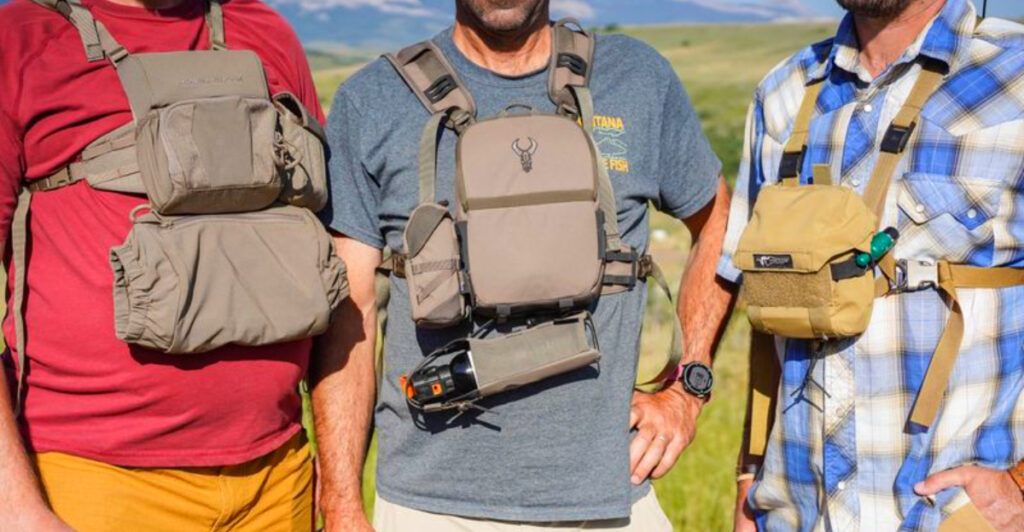
Good glass reduces eye strain and helps you evaluate animals without unnecessary movement that might spook them. Binoculars let you confirm species, sex, and size from a distance, ensuring you stay legal and ethical before you ever shoulder your weapon.
A chest harness keeps your optics accessible, stable, and protected from bumps and drops. It also distributes weight evenly so they do not swing around or dig into your neck during long hikes.
Invest in the best binoculars you can afford. Clear, bright optics make a huge difference in low light, and quality glass will last you decades if you take care of it.
13. Wind checker and scent control basics

A simple, unscented wind indicator like squeeze-bottle powder or a spool of thread helps you read wind direction and subtle thermals that shift throughout the day. Understanding air movement is fundamental to getting close to game without being detected.
Skip the miracle sprays and gimmicks; woodsmanship and wind awareness matter far more than any bottled scent eliminator. Play the wind correctly, and you will see animals relax instead of bolt.
Wash your clothes in unscented detergent, store them in sealed bags, and avoid strong-smelling foods or smoke before a hunt. These basics, combined with smart positioning, give you a real edge in the field.
14. Emergency kit: fire source plus space blanket

A lighter and backup firestarter, plus a compact emergency Mylar blanket, weigh almost nothing but add a critical safety margin if you get stuck after dark or weather turns ugly. Hypothermia can set in fast, especially if you are wet, injured, or simply exhausted.
Fire provides warmth, light, a signal, and a huge psychological boost when things go sideways. Practice starting a fire with damp materials before you actually need the skill in a stressful situation.
A space blanket reflects up to ninety percent of your body heat and packs down smaller than a deck of cards. Toss one in every pack you own.
15. Licenses, tags, and current regulations

Keep your license, tags, and a quick link or printed booklet of current local rules with you at all times in the field. Season dates, bag limits, tagging procedures, and transport requirements change, sometimes mid-season, and ignorance is not a valid defense if you get checked.
Many states now publish official electronic regulations that are updated in real time. Bookmark the page on your phone or download a PDF before you lose cell service.
Check the rules before you go and again after a successful harvest. Proper tagging and reporting are not just legal requirements; they are essential data points that wildlife managers use to keep populations healthy for future seasons.