
Affiliate disclosure: As an Amazon Associate I earn from qualifying purchases. Learn more
Winter can feel like a beautiful frozen playground or a cold, slippery challenge depending on what you bring along. The right gear transforms icy trails and snowy slopes from scary obstacles into exciting adventures you can actually enjoy. Whether you are hiking through powder, skiing down mountains, or just trying to walk the dog without falling, having the proper equipment makes all the difference. These twelve essential items will help keep you warm, safe, and steady no matter what winter throws your way.
1. Traction Devices (Microspikes / Ice Cleats)

Walking on ice without the right grip feels like trying to balance on a skating rink wearing socks. Traction devices slip right over your everyday boots and feature small metal spikes or coils that dig into frozen surfaces.
They transform slippery sidewalks and icy trails into walkable paths by giving you the grip you desperately need. Perfect for winter hikes, neighborhood walks, or any packed snow situation, these little additions to your footwear can prevent embarrassing slips and dangerous falls.
Gear experts consistently rank them as must-have winter hiking equipment because they work so well on hard ice and compacted trails.
2. Insulated, Waterproof Winter Boots

Nothing ruins an outdoor adventure faster than frozen, soaking-wet feet. Quality winter boots combine three critical features: thick insulation to trap warmth, waterproof materials to block moisture, and aggressive treads for grabbing slippery surfaces.
Look for boots with waterproof membranes, adequate synthetic or wool lining, and deep tread patterns designed specifically for snow and ice. Reviews from hiking experts repeatedly emphasize that good boots keep your feet warm, dry, and supported in slushy conditions.
They also help prevent frostbite and reduce your chances of slipping, making them worth every penny you invest in them.
3. Merino Wool Base Layers

Your winter outfit needs to start with the right foundation, and merino wool delivers exactly that. Unlike cotton, which traps sweat and leaves you clammy, merino actively pulls moisture away from your skin while regulating your body temperature.
It also resists odors far better than synthetic fabrics, so you can wear it multiple days without smelling like a gym locker. Outdoor guides consistently recommend merino base layers because of their incredible warmth-to-weight ratio and moisture-wicking abilities.
Wear them as long-sleeve tops and leggings under your regular clothes, or use them as the crucial first layer in a proper cold-weather layering system.
4. A Layering System (Base + Mid + Shell)

Forget wearing one giant puffy coat that makes you look like a marshmallow. Smart winter dressing uses three distinct layers that work together: a base layer that wicks sweat, a mid-layer that provides insulation like fleece or down, and an outer shell that blocks wind and precipitation.
This system keeps you warmer and drier because you can adjust by adding or removing layers as your body heats up or cools down. Outdoor organizations and gear writers emphasize that this flexibility beats a single heavy jacket every time.
It works for everything from casual snow walks to serious backcountry tours.
5. Ski / Snow Goggles

Goggles do way more than make you look cool on the slopes. They protect your eyes from biting wind, blowing snow particles, and intense UV rays that bounce off bright white snowfields and can damage your vision.
Gear tests and expert guides call them mission-critical for both comfort and safety during skiing or snowboarding. They improve contrast in flat light or storms, reduce eye fatigue during long days outside, and prevent your eyes from watering and freezing in strong wind.
Without them, you might find yourself squinting painfully or temporarily blinded by blowing snow at exactly the wrong moment.
6. Balaclava or Winter Face Mask

Exposed skin on your cheeks, nose, and chin can suffer windburn and frostbite surprisingly quickly in cold, windy weather. Balaclavas and winter face masks are designed to shield your face, neck, and sometimes your entire head from icy air.
Many models work as neck gaiters or half-masks that you can adjust depending on conditions. They dramatically cut wind chill, help your skin retain moisture, and make winter biking, skiing, or hiking far more comfortable.
Once you try one on a truly frigid day, you will wonder how you ever managed without this simple piece of fabric protecting your face.
7. Gaiters (Snow Gaiters)

Walking through snow deeper than your ankles without gaiters means you will end up with boots full of cold, wet snow. Gaiters wrap around your lower legs and the tops of your boots, creating a barrier that blocks snow, mud, and debris from sneaking inside your footwear.
Expert advice notes that gaiters help keep your feet dry and warmer, which extends your comfort and safety outdoors. They prove especially useful for snowshoeing, winter hikes on deep or slushy trails, and any situation where you are punching through crusty snow layers.
They might look a bit funny, but they work incredibly well.
8. Trekking Poles with Snow Baskets

Trekking poles give you stability in any season, but winter demands special snow baskets—those wider discs near the tips that stop poles from plunging too deep into soft snow. Winter gear guides explain that larger powder baskets increase surface area, keeping poles on top of fluffy snow and improving your balance.
They also help you probe for hidden hazards like ice patches or buried obstacles. In winter, poles provide better balance on uneven, icy terrain, reduce your slip risk, and take strain off your knees and hips during long descents.
They turn uncertain steps into confident strides.
9. Snowshoes

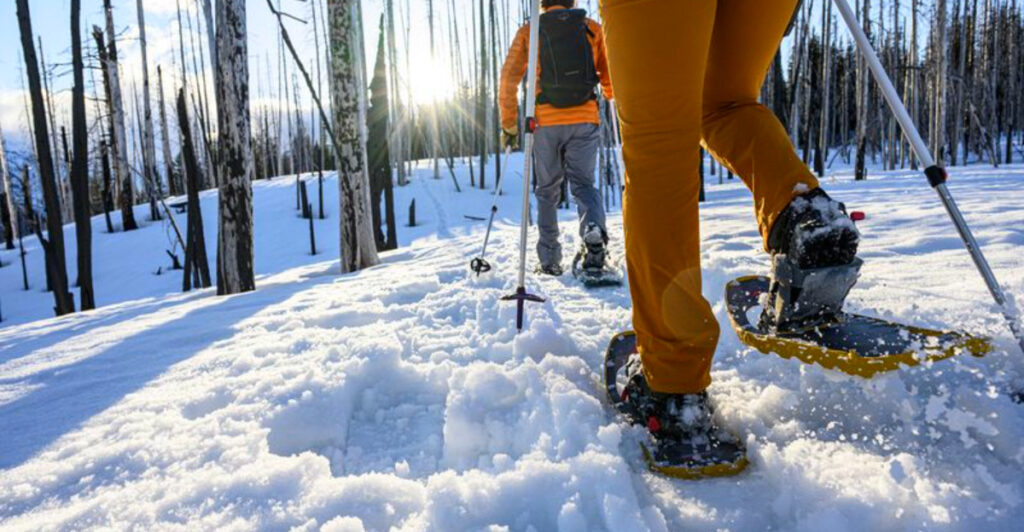
When snow gets deep, regular boots mean post-holing—sinking knee-deep with every exhausting step. Snowshoes spread your weight over a much larger surface area, typically between 120 and 300 square inches, so you float on top instead of sinking.
Guides on snowshoeing explain that this flotation makes traveling over deep snow far easier and provides better footing and balance. Use them for exploring unplowed trails, backcountry walks in deep powder, or winter fitness hikes where regular walking would leave you sweaty and frustrated.
They turn impossible treks into enjoyable journeys through winter wonderlands you could never reach otherwise.
10. Insulated Stainless-Steel Water Bottle

Staying hydrated matters just as much in winter as summer, but water can quickly become uncomfortably cold or start turning to ice. Double-wall vacuum-insulated stainless-steel bottles significantly reduce heat transfer, keeping drinks hot or cold for hours no matter the outside temperature.
Reviews and expert guides agree that these bottles are essential winter gear. Hot drinks stay warm longer, providing both hydration and comforting heat, while cold drinks do not turn to slush as quickly.
Stainless steel also avoids many microplastic and liner concerns highlighted for other materials, making it a healthier long-term choice for you and the environment.
11. Chemical or Rechargeable Hand Warmers

Hand warmers might be tiny, but they deliver huge comfort boosts. Disposable chemical warmers use an exothermic reaction—usually oxidation of iron powder with salt and water—to generate steady heat when exposed to air.
They are perfect for slipping into gloves or mittens on very cold days, stashing in pockets to warm chilled fingers, or providing emergency heat for toes or electronics like cameras that you want to keep functional. Rechargeable electric warmers offer adjustable heat without the waste of single-use packets.
Either type turns painfully cold hands into comfortable ones, letting you enjoy winter instead of enduring it with frozen fingers.
12. Avalanche Safety Kit (Beacon, Shovel, Probe)

Venturing into avalanche terrain for backcountry skiing, splitboarding, or off-piste touring without a beacon, shovel, and probe is considered dangerously reckless by avalanche organizations and gear experts. This trio forms your essential safety system: the beacon lets you locate buried companions and be located yourself, the probe pinpoints the exact position and depth, and the shovel lets you dig quickly through packed avalanche debris.
Important reminder: owning the gear means nothing without proper avalanche training and regular practice. These tools can save lives, but only if you know how to use them fast and correctly under extreme stress.