
Affiliate disclosure: As an Amazon Associate I earn from qualifying purchases. Learn more
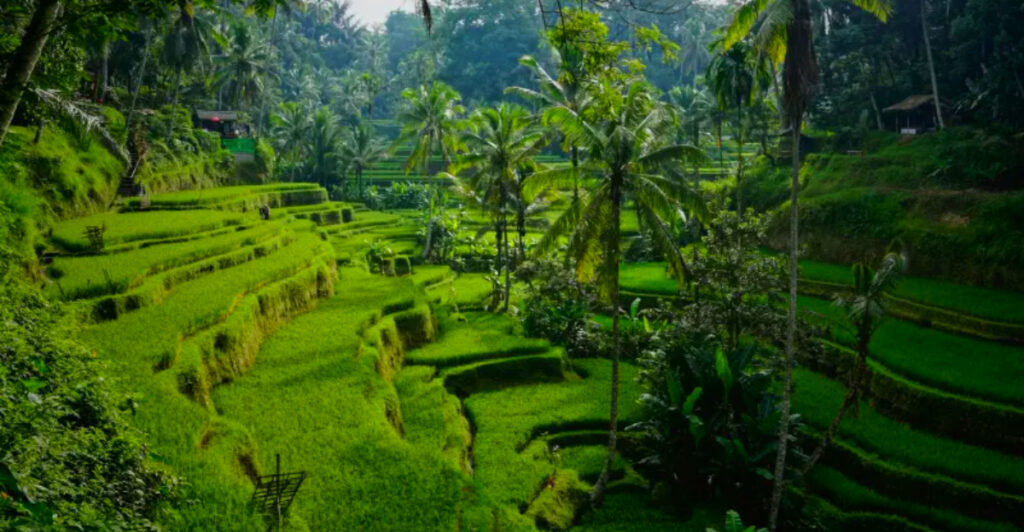
Bali’s rice terraces glow in layers of emerald, but not every camera can bottle that vivid magic. Choose the right body and glass, and those gradients of green leap from shadow to sun without losing texture. In this guide, you’ll discover nine powerhouse options and how to use them to make Bali’s fields sing. Ready to capture every luminous blade and curve? Let’s dial in the gear that turns green into glory.
1. Canon EOS R5

The Canon EOS R5 shines when Bali’s greens shift under soft golden light. Its excellent dynamic range preserves terrace shadows while keeping sky highlights controlled, giving foliage believable depth and saturation. Use a polarizing filter to tame glare on wet leaves and boost color. Pair the R5 with a 16-35mm lens and shoot between 6–8 AM for dew-lit textures. Activate HDR PQ or bracket exposures for high-contrast scenes. The autofocus tracks lone farmers weaving through the paddies, adding scale and story. Fine-tune greens in Canon Log or RAW; subtle HSL tweaks keep tones lush yet natural.
2. Nikon Z7 II

The Nikon Z7 II is prized for color accuracy and sharpness, ideal for Bali’s nuanced greens. Pair it with the Z 24–70mm f/2.8 S for edge-to-edge clarity across stepped fields. Engage Auto ISO with minimum shutter to maintain crisp detail as light changes. For vibrant yet realistic foliage, start with the Standard Picture Control and fine-tune greens via RAW profiles. Early morning fog adds depth; use exposure delay and a remote to avoid shake on long shots. The Z7 II’s dynamic range handles bright sky while preserving shaded paddies, keeping tonal transitions smooth and lifelike.
3. Fujifilm X-T4

The Fujifilm X-T4 brings expressive color via film simulations that flatter tropical greens. Try Classic Chrome for moody, subdued palettes at midday, or Velvia for sunrise saturation. With the XF 10–24mm f/4, capture sweeping curves and foreground blades for depth. In-body stabilization steadies slower shutters when clouds soften light. Add a CPL to control reflections on wet leaves and water channels. Shoot RAW+JPEG to compare simulations against flexible edits. Keep greens believable by moderating vibrance over saturation. The X-T4’s tactile dials encourage deliberate exposure, helping you hold highlight detail in luminous, layered terraces.
4. Panasonic Lumix GH5

The Panasonic Lumix GH5 excels for hybrid shooters capturing stills and cinematic motion in Bali’s terraces. Its robust 10-bit video lets you grade greens without banding, especially under mixed light. Use V-Log L and expose to protect highlights, then add subtle teal-gold contrast in post. For stills, pair with a wide-angle lens and CPL to enrich hues. The GH5’s stabilization invites handheld tracking shots along terrace paths. Add variable NDs for consistent shutter speeds. Compose with S-curves of irrigation lines and a human element for scale. Early golden hour gives glossy, layered greens real depth.
5. Canon RF 16-35mm f/2.8L IS USM Lens

The Canon RF 16–35mm f/2.8L IS USM unlocks expansive terrace vistas with minimal compromise. At 16mm, emphasize foreground rice blades for immersive scale; stop to f/8–f/11 for crisp corners. Its stabilization helps low-light dawn frames, while a CPL enriches greens and cuts glare. Watch for edge distortion—keep horizons level and avoid stretching farmers near borders. Use sunstars at f/16 to accent late-afternoon flares. The lens’s contrast and micro-contrast reveal layered paddies without muddying tones. Pair with the EOS R5 for maximum detail, bracketing tricky scenes to preserve both reflective water channels and deep shadows.
6. Sony FE 24-70mm f/2.8 GM Lens

The Sony FE 24–70mm f/2.8 GM offers flexible composition for Bali’s varied terrace scenes. Go wide for sweeping layers, then zoom to isolate patterns, farmers, or reflective channels. Its sharpness and contrast create dimensional greens without over-saturation. Combine with a CPL for cleaner skies and deeper foliage. For detail-rich shots, stop to f/5.6–f/8 and set base ISO. Use late afternoon light to contour ridges and add luminous highlights along water edges. This lens balances versatility and image quality, making it a reliable walkaround companion when exploring changing vantage points along narrow terrace paths.
7. Nikon Z 24-70mm f/2.8 S Lens

The Nikon Z 24–70mm f/2.8 S delivers superb sharpness and micro-contrast, making terrace textures pop. Its controlled flare and color neutrality keep greens honest across variable light. Use the midrange to compress layers, accentuating repeating curves and irrigation lines. Engage a CPL to manage reflections on wet leaves. For cohesive sets, maintain consistent white balance—Cloudy often flatters greens at dawn. Pair with the Z7 II for high-resolution detail, bracketing when sky brightness outpaces shaded paddies. The lens’s weather sealing handles humid mornings, letting you work confidently through mist and occasional drizzle without compromising clarity.
8. Fujifilm XF 10-24mm f/4 R OIS WR Lens

The Fujifilm XF 10–24mm f/4 R OIS WR excels at capturing sweeping terrace geometry with stabilized ultra-wide coverage. At 10–14mm, anchor the frame with textured foreground leaves to exaggerate depth. OIS helps when light dips under clouds, keeping detail crisp. Combine with a CPL to darken foliage and tame reflections across water channels. Use Velvia or Eterna Bleach Bypass for distinct looks, but shoot RAW to fine-tune greens. Keep horizons level and avoid tilting excessively to prevent distortion of terraces. Early morning offers delicate mist that layers paddies into luminous, gradated greens.
9. Sony A7R IV

The Sony A7R IV delivers immense resolution, revealing micro-textures across terraces and irrigation veins. Its low-light performance helps pre-dawn compositions stay clean, letting greens glow without heavy noise reduction. Set Creative Style to Neutral and refine in RAW for balanced color fidelity. Combine a 24–70mm for flexible framing—wide for sweeping curves, mid-zoom for layered patterns. Use a CPL to deepen sky and foliage while controlling specular highlights on water channels. Shoot at 1/125–1/250 to freeze subtle leaf movement, or slower with a tripod for gentle motion. Ensure highlight metering for sunlit ridges.