Affiliate disclosure: As an Amazon Associate I earn from qualifying purchases. Learn more
Arizona is full of places where people built entire lives out of stone, clay, and desert grit hundreds of years before we ever showed up. You can stand at the base of a four-story adobe tower or a cliff dwelling tucked into red rock and feel just how long these communities lasted.
Most of these spots are quiet, affordable, and closer than you think, whether you live in Phoenix, Flagstaff, or somewhere in between. Here are 15 sacred Arizona sites that reward you for slowing down and paying attention.
1. Casa Grande Ruins National Monument, Coolidge, AZ
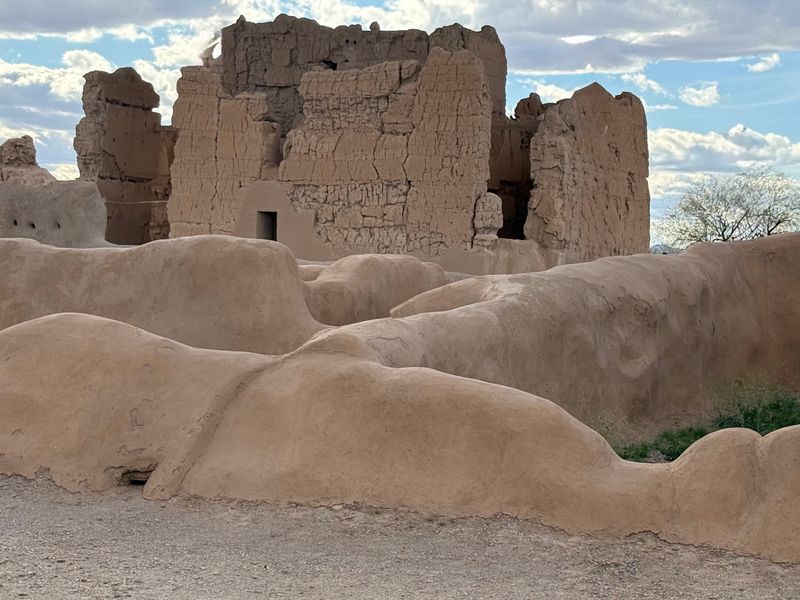
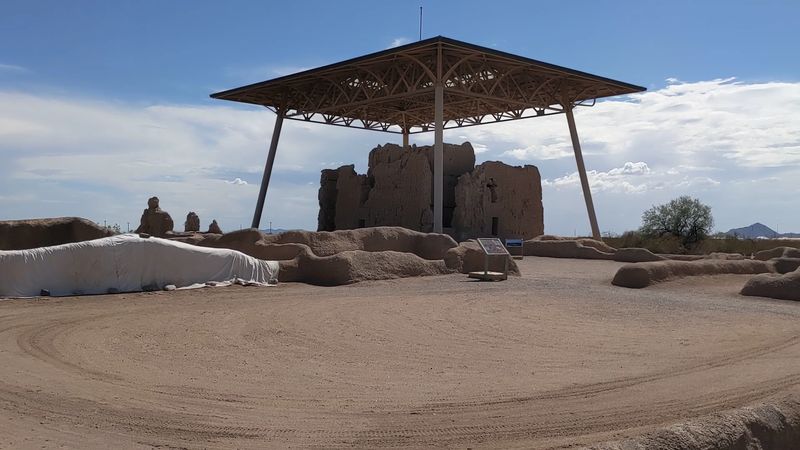
A four-story earthen tower built by the Hohokam people back in the 1300s is not something you expect to find sitting in the flat desert near Coolidge. Casa Grande Ruins protects that great house along with a ballcourt and the remains of an irrigation canal system that fed a whole farming community.
The structure is humbling when you consider it went up around 700 years ago without modern tools. Indoor displays walk you through the story of the Sonoran Desert people, and rangers fill in the details that make the place click.
It stays a sacred site for several Arizona tribes today, which adds weight to every quiet minute you spend here. There are picnic tables and restrooms, dogs are welcome, and parking is free.
Hours run 9 AM to 4 PM daily, and it makes an easy stop between Phoenix and Tucson.
2. Kinishba Ruins, Whiteriver, AZ
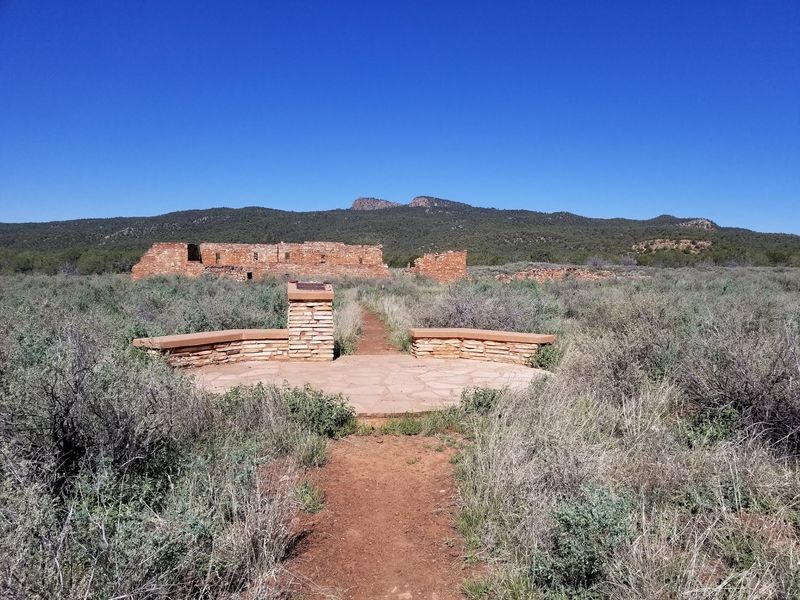
Few people ever make it out to Kinishba, and that is exactly what makes it special. Sitting on the White Mountain Apache Reservation near Whiteriver, this large ancient pueblo once held around 600 rooms and was excavated back in the 1940s.
The quiet here is real. With very little signage on site, walking among the well-preserved stone rooms feels like a private moment of reflection rather than a guided attraction.
A quick heads up worth knowing before you go: you will need to stop at the museum at Fort Apache to pay for a permit, which covers both the museum and the ruins. Reading up on the history ahead of time helps, since there is little to explain things once you arrive.
A dirt road leads to the site, so plan accordingly. If you want ancient architecture without crowds, this out-of-the-way spot delivers peace along with its stonework.
3. Montezuma Castle National Monument
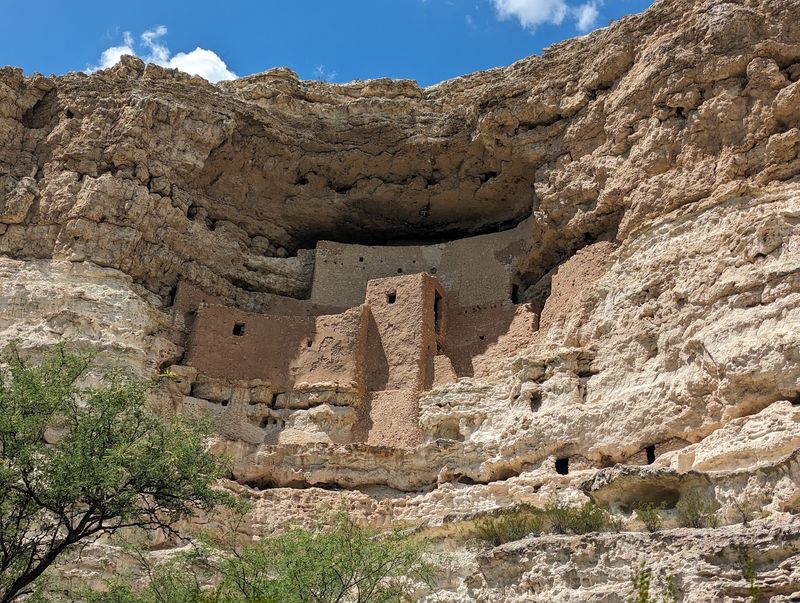
Tucked into a limestone cliff high above Beaver Creek, Montezuma Castle counts as some of the best-preserved cliff dwellings in North America. The Sinagua people built it into the rock back in the 12th century, connecting rooms with ladders and using the cliff itself for shelter.
What gets people is the setting. The Verde Valley greenery, the creek below, and the sheer engineering of building homes into a cliff face all come together in one view.
There is a museum and a gift shop, plus an easy paved path that works well for families and kid-friendly hikes. Picnic tables and restrooms round out the amenities, and dogs are allowed.
Located on Montezuma Castle Rd in Camp Verde, it is open daily from 9 AM to 4:45 PM. It sits close enough to I-17 that it fits neatly into a Sedona or Flagstaff trip.
4. Elden Pueblo Heritage Site, Flagstaff, AZ
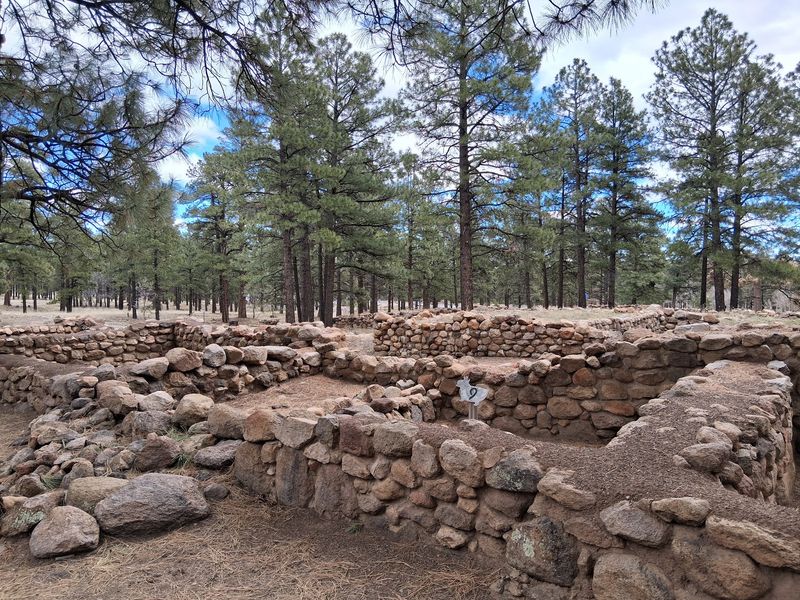
Right off US-89 in Flagstaff sits a sacred Hisat’sinom gathering place that you can walk into after just a few steps from your car. Elden Pueblo Heritage Site is an archaeological site where ancient walls have been restored, with a numbered self-guided trail to follow.
Grab the printed trail guide from the sign-in box by the path entrance, and the numbered stops start telling the story of the people who lived in the Flagstaff area long ago. It is a genuine chance to learn about their history and culture without a big time commitment.
Ongoing preservation work is visible as you walk, and community programs keep the site active. The rule here is simple and important: do not touch anything, and leave everything as you found it.
Open 24 hours with free parking, it makes an easy leg-stretcher when you are passing through town.
5. Wupatki National Monument
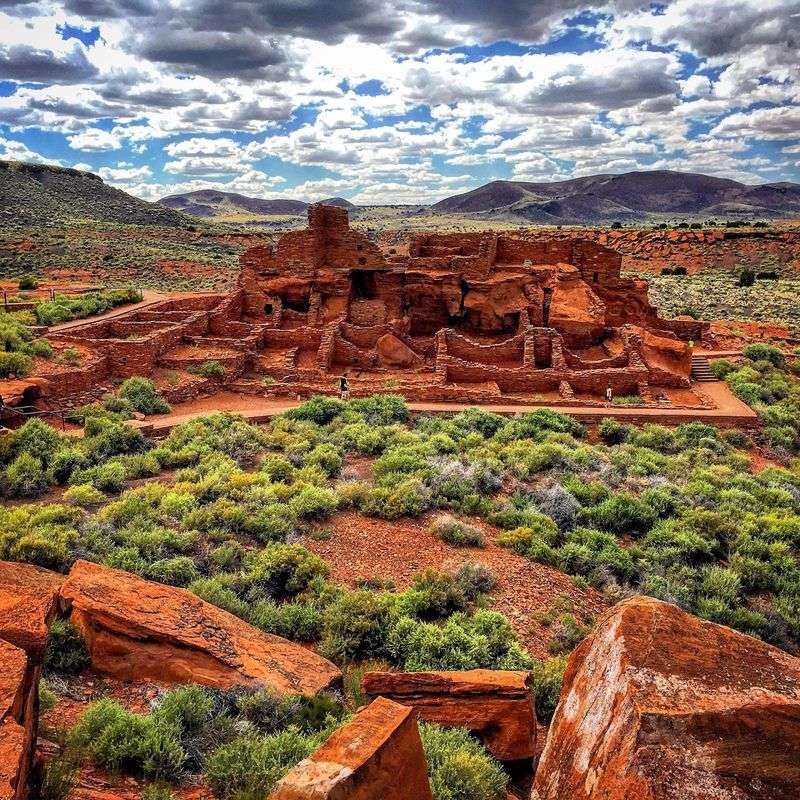
Red pueblos rising out of the high desert with painted mountains behind them make Wupatki one of the most photogenic ancient sites in the state. Located in Coconino County near Flagstaff, this monument protects the ruins of five prehistoric pueblos.
The trails here are mostly easy and flat, which means you can explore the remarkably well-preserved structures without wearing yourself out. One of the quirkier features is a blowhole, a natural opening in the earth that gives kids and adults something unexpected to talk about.
The combination of ancient architecture and wide desert scenery creates a genuinely unique experience. You can drive up close to a ruin site and imagine daily life playing out here centuries ago.
Picnic tables, restrooms, and kid-friendly hikes make it family-ready. Pair it with nearby Sunset Crater for a full day in the painted desert north of Flagstaff.
6. Tusayan Ruin, Grand Canyon Village, AZ
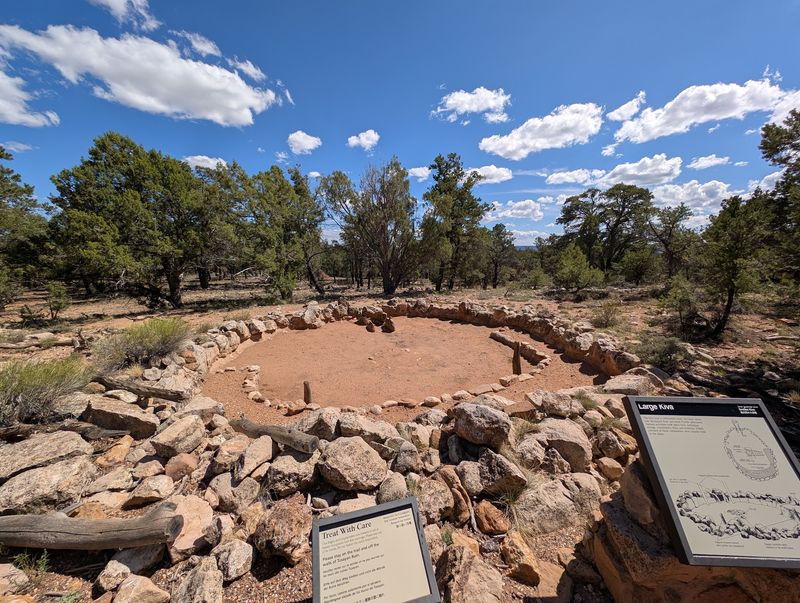
Most people race past this one on their way to the big view, and that is a small shame. Tusayan Ruin sits inside Grand Canyon National Park along Desert View Drive, protecting an 800-year-old Ancestral Puebloan village.
The trail is short, roughly a 20-minute walk, and it is well marked with plaque narratives that explain what you are looking at. Ranger-led tours add another layer of context to this smaller village site.
A quaint museum with interesting artifacts sits right there too, making it a worthwhile stop even if the ruins are more modest than the giants elsewhere in the region. Their significance comes from the history rather than the scale.
Hours run 9 AM to 5 PM, though it is closed Tuesday and Wednesday, so plan around that. It is an easy, kid-friendly add-on to a South Rim day.
7. Palatki Heritage Site
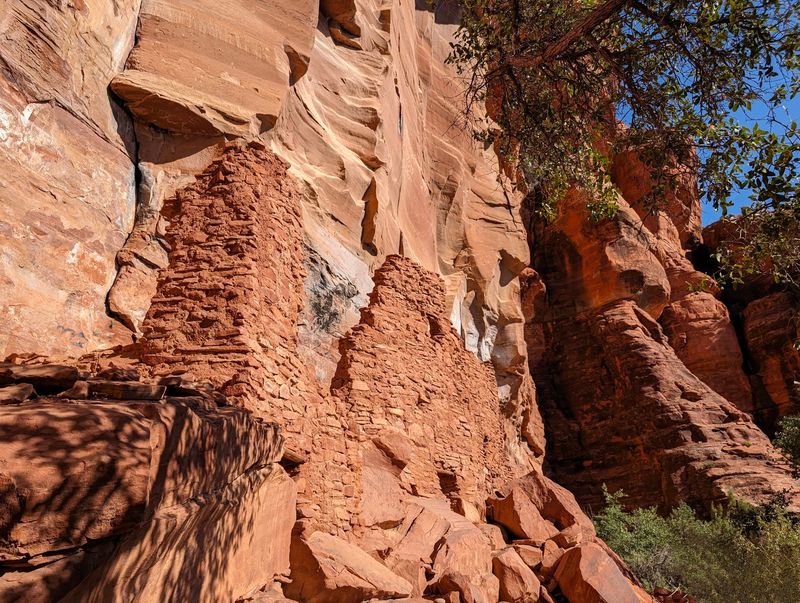
Ancient cliff dwellings tucked into a red sandstone canyon, with rock art panels and sweeping valley views, make Palatki one of Sedona’s most rewarding archaeological stops. The native people who built this site did so more than 800 years ago, and the planning behind it still impresses.
Knowledgeable volunteer docents lead the experience, sharing the significance and long history of both the ruins and the pictographs. If you enjoy Native American traditions and history, the guided storytelling here is the real draw.
The setting off the beaten path adds to the appeal, with red rock canyon scenery framing everything you see. The pictographs sit a short distance from the dwellings, so you get two features in one visit.
Hours are limited to Wednesday through Saturday, 8:30 AM to noon, and getting tickets in advance is recommended. Free and paid parking are both available.
8. Honanki Heritage Site, Sedona, AZ
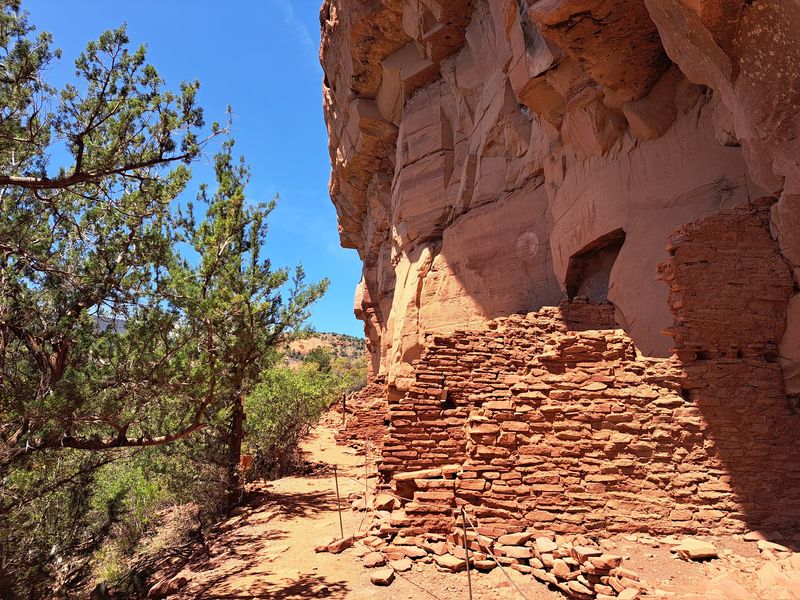
Out on Loy Butte Road near Sedona, Honanki holds cliff dwellings dating from the 12th through 14th centuries, along with many panels of Ancient Pueblo rock art. Walking the site brings a calm, almost timeless feeling, with nature wrapped around the ruins on every side.
The scale of what these people built without modern technology is the part that stays with you. This was once a thriving community, and standing near the dwellings and pictographs makes that history feel close.
Friendly, knowledgeable staff lead short hikes to the well-maintained ruins, and the red rock views along the way are worth the trip on their own. A modest fee applies for the short walk to the site.
Open daily from 9:30 AM to 3 PM, with free and paid parking on site. Check road conditions before you go, since the approach can be rough.
9. Canyon de Chelly National Monument
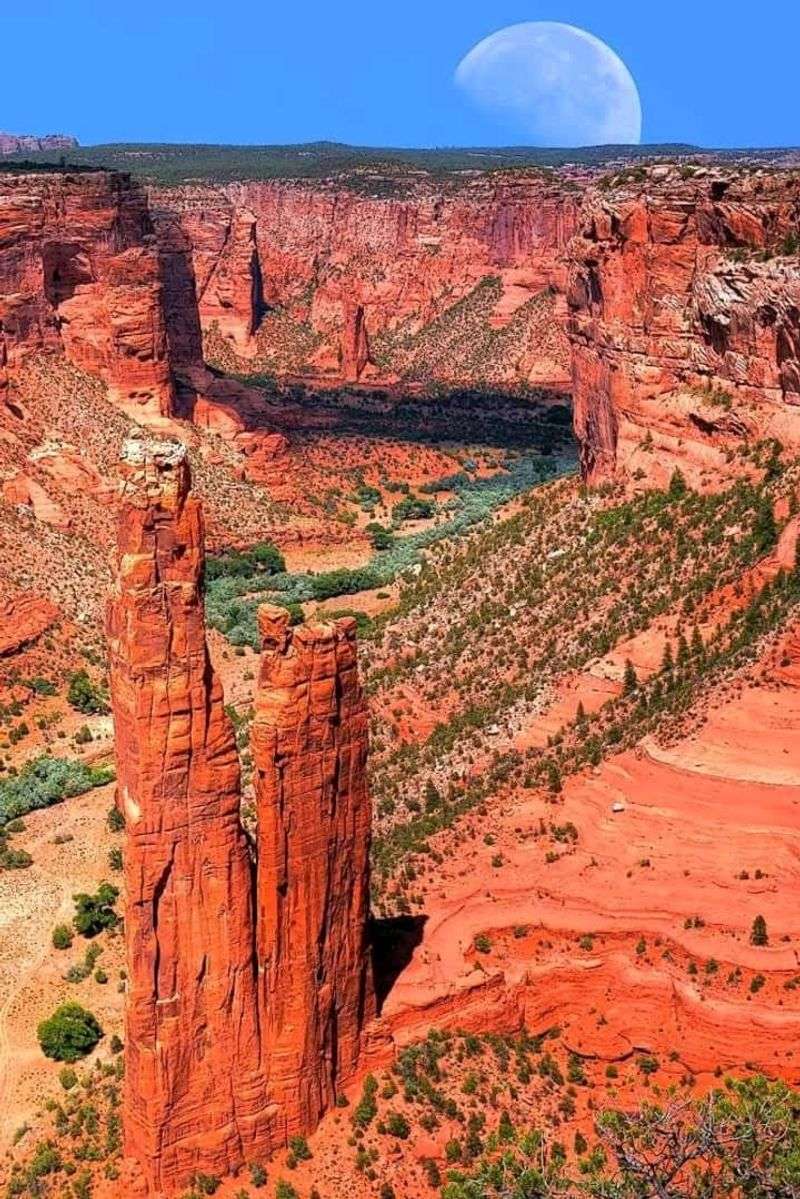
Some places show you beauty, and Canyon de Chelly makes you feel something deeper than that. This expansive monument sits on the Navajo Nation, offering overlooks of ancient ruins, petroglyphs, and the famous Spider Rock spire rising from the canyon floor.
The scenery does a lot of the talking. Well-maintained roads connect a series of viewpoints, and hiking trails lead down to the bottom of the canyon for those who want a closer look at the Anasazi ruins.
Chinle serves as the access point along Indian Reservation Hwy 7, and the town has modern hotels if you want to stay the night and catch the canyon at different times of day. Guided tours are available and add valuable context to what you are seeing.
Picnic areas, restrooms, and kid-friendly hikes make it workable for families. It is a long drive from most of Arizona, but the payoff is one of the state’s most profound landscapes.
10. Tuzigoot National Monument, Clarkdale, AZ
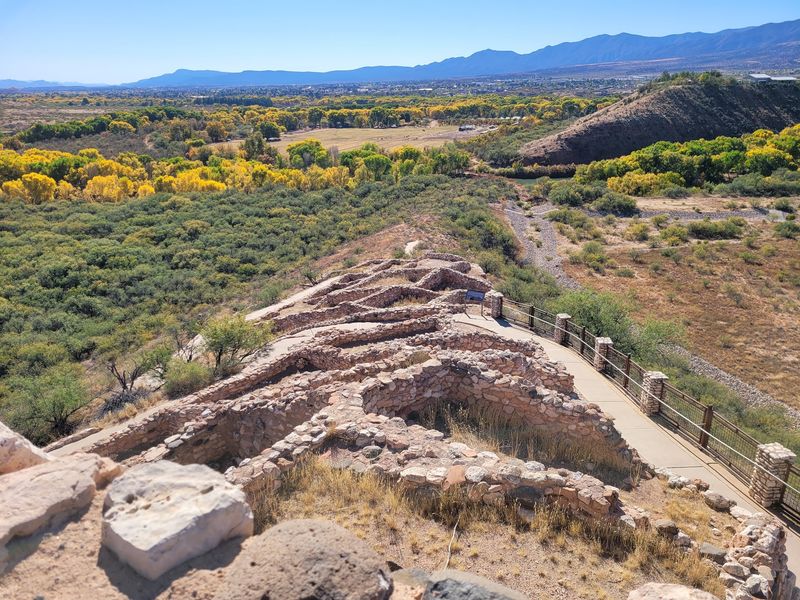
Sweeping Verde Valley views from an ancient hilltop pueblo make Tuzigoot the kind of place that quietly surprises you and then stays with you. The Sinagua people built this stone village about 1,000 years ago, and its perch above the valley still commands attention.
A short interpretive trail, roughly a third of a mile, loops through the ruins and gives you a real sense of how these homes were arranged. The gentle grade keeps it accessible for most visitors, including families with kids.
The visitor center holds a small museum where unique artifacts collected on site help bring the Sinagua story to life. A gift shop rounds out the stop.
Located at 25 Tuzigoot Rd in Clarkdale, it is open daily from 9 AM to 4:45 PM. Picnic tables, restrooms, and dog-friendly access make it an easy pairing with nearby Jerome or Cottonwood.
11. Walnut Canyon National Monument
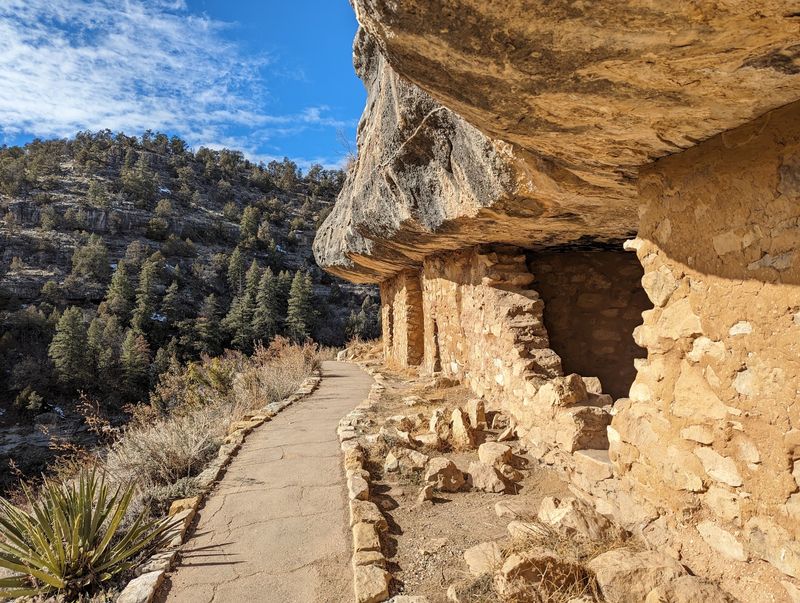
A deep, curving canyon just outside Flagstaff hides dozens of Sinagua cliff dwellings built right into its walls. Walnut Canyon lets you walk a paved trail with handrails and stairs that drops you into the canyon and past these ancient homes.
The Island Trail brings you close enough to see where families once lived, complete with evidence of ancient campfires. It is a stunning blend of natural beauty and cultural history packed into a compact monument.
The visitor center offers a panoramic canyon view, a gift shop, and rangers who fill in the prehistory and cultural legacy of the canyon. If you would rather skip the stairs, the rim view alone is worth the stop.
Open daily 9 AM to 5 PM, with picnic tables, restrooms, and kid-friendly hikes. Sitting just off I-40, it makes a quick and memorable detour when leaving Flagstaff.
12. Navajo National Monument, Shonto, AZ
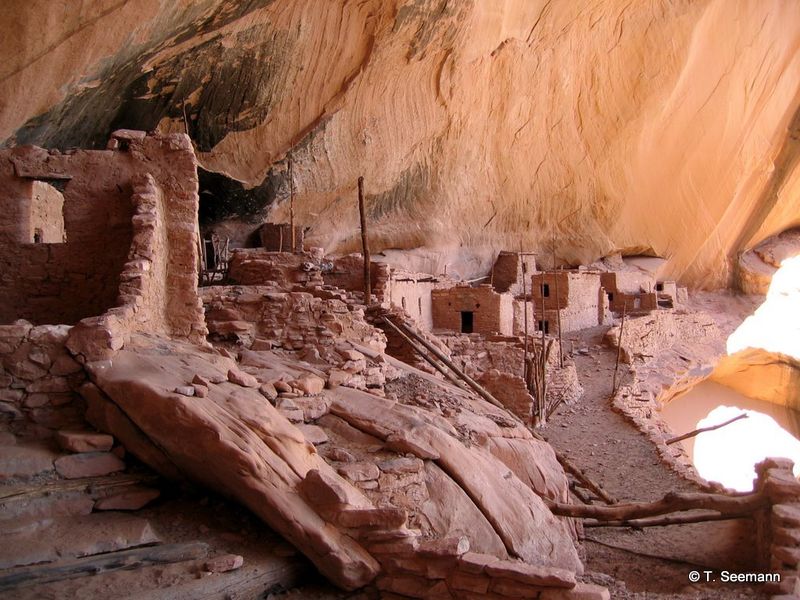
Quiet is the word that keeps coming up at Navajo National Monument, and that is a gift in a state full of busy parks. Along AZ-564 near Shonto, this monument preserves an ancient Pueblo cliff village tucked into a canyon alcove.
An easy short hike leads to an overlook where the spectacular cliff dwellings come into view, framed by canyon scenery. The trails are manageable, the landscapes are dramatic, and the feeling is peaceful rather than crowded.
Managed by the National Park Service, the site helps preserve both the history of the Navajo people and the beauty of the canyon itself. Seasonal ranger-led tours go deeper for those who want the full story of the cliff dwellings.
Free camping is available, and parking is free too. You can reach it through Shonto or the Black Mesa junction, making it a worthwhile detour in Arizona’s remote northeast.
13. Tonto National Monument, Roosevelt, AZ
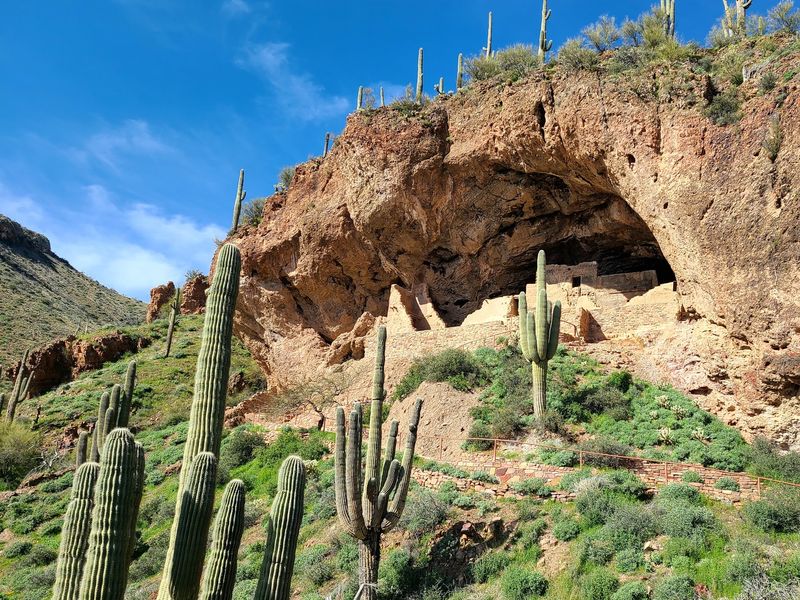
Cliff dwellings above a desert lake, with saguaros lining the path up, give Tonto National Monument a look all its own. The Salado communities built these dwellings between roughly 1250 and 1450, and they remain remarkably well preserved.
The trail is paved and fairly steep but short, with resting benches along the way. The climb rewards you with great views of Roosevelt Lake, a cactus garden, and 700-year-old ruins you can walk right up to.
A museum near the trailhead displays artifacts and fills in the history of the Salado people. Friendly rangers and staff make the experience even better for first-timers.
Located at 26260 AZ-188 in Roosevelt, it is open daily from 8 AM to 3 PM. With the lake, the history, and the desert scenery all in one spot, it makes a strong stop on a drive along the Apache Trail region.
14. Besh-Ba-Gowah Museum, Globe, AZ
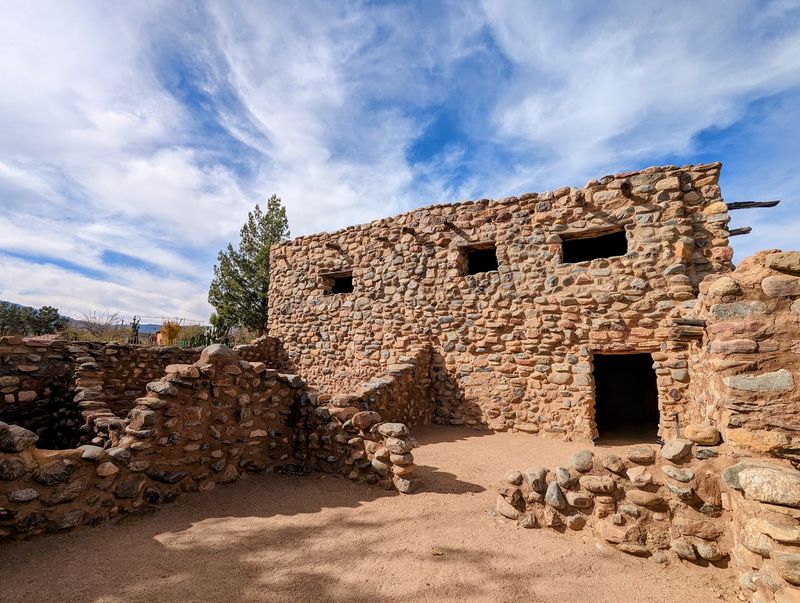
In Globe, an ancient pueblo has been reconstructed so you can actually walk through the rooms rather than just look at them from a distance. Besh-Ba-Gowah pairs that hands-on interpretive trail with a small museum full of tools, pottery, beads, and other artifacts found right on the property.
The visitor center holds a large collection, all of it recovered on site, which makes the story of the people who lived here feel comprehensive and grounded. A short film adds context before you head out to the ruins.
Walking the reconstructed dwellings gives a real sense of how the community was arranged and how daily life worked. The grounds are well maintained, and knowledgeable staff are on hand to answer questions.
Admission is reasonably priced for the depth of history on offer. Located at 1324 S Jesse Hayes Rd, it is open daily from 9 AM to 4:30 PM and works well as a family stop on a sunny day.
15. Painted Rock Petroglyph Site and Campground, Dateland, AZ
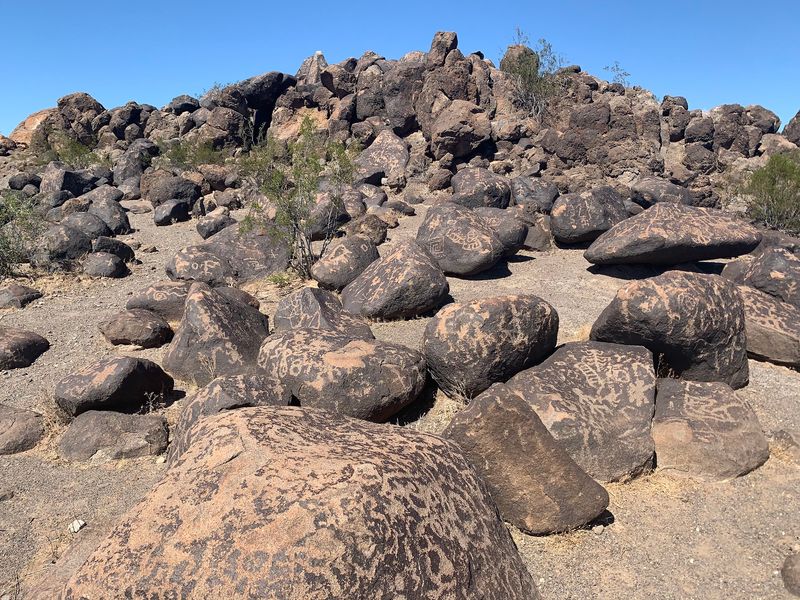
About eighteen miles northwest of Gila Bend, on the eastern edge of the Painted Rock Mountains, sits a mound of boulders covered in prehistoric rock art. Painted Rock Petroglyph Site feels much bigger once you are standing next to it, with carvings layered across the stone.
Spirals, animals, human figures, and mysterious symbols cover the rocks, left by various groups across different time periods. Together they offer a fascinating glimpse into the beliefs and lives of the people who created them.
Access is easy, and the setting is cool and peaceful despite its stretch of open desert. A covered picnic area, barbecue grills, and a campground make it a genuine stop rather than a quick roadside glance.
Open 24 hours with restrooms and picnic tables, it is managed by the BLM. Dogs are allowed and there are kid-friendly hikes, making it a relaxed pull-off along the road near Dateland.