
Affiliate disclosure: As an Amazon Associate I earn from qualifying purchases. Learn more
Capturing wild animals in their natural habitat is thrilling, but having the right camera makes all the difference between a blurry mess and a frame-worthy shot. Whether you’re tracking birds in flight or photographing mammals at dusk, modern cameras offer incredible autofocus, fast shooting speeds, and smart features that help you nail the moment. From affordable crop-sensor bodies to professional powerhouses, there’s a camera for every budget and skill level that will transform your wildlife adventures.
1. Nikon Z9 (flagship, do-everything wildlife body)

Nikon’s flagship mirrorless body is built for photographers who refuse to miss a single frame. The blackout-free viewfinder keeps your subject visible even during rapid bursts, while the deep buffer means you can hold down the shutter without worrying about slowdowns.
Shooting at 20 frames per second in RAW (or even faster in JPEG) gives you incredible flexibility when a hawk swoops or a deer bolts. The 45.7-megapixel stacked sensor delivers sharp detail you can crop heavily without losing quality.
Professional weather sealing and 8K video round out a package that handles everything from Arctic expeditions to tropical rainforests with confidence.
2. Sony α9 III (global-shutter speed demon)

Sony broke new ground by putting the first full-frame global shutter into a production camera, eliminating the rolling-shutter wobble that plagued fast-moving subjects. Now you can photograph a sprinting cheetah or a hummingbird mid-hover without distortion.
Shooting at a blistering 120 frames per second with continuous autofocus and auto-exposure means you’ll capture every wing beat and muscle twitch. The 24.6-megapixel stacked sensor prioritizes speed over resolution, perfect for action-first shooters.
Advanced subject tracking locks onto animals and keeps them sharp, even when they dart unpredictably through your frame.
3. Canon EOS R3 (pro focus & tracking)

Built like a tank and designed for the harshest conditions, the R3 won’t let you down when rain starts falling or dust clouds kick up. Canon’s subject tracking is famously sticky, locking onto animals, vehicles, and people with impressive tenacity.
High-speed electronic bursts hit 30 frames per second, giving you plenty of frames to choose from when a bear emerges from the forest or an eagle dives. The RF mount opens up access to Canon’s excellent telephoto lineup.
Professional ergonomics and a robust build make long days in the field comfortable and worry-free.
4. Sony α1 (speed + resolution in one body)

Sometimes you need both reach and speed, and the α1 delivers without compromise. The 50-megapixel sensor gives you enough detail to crop distant subjects heavily, turning a far-off owl into a frame-filling portrait.
Yet it still fires at 30 frames per second with full autofocus and auto-exposure tracking, a combination that was unthinkable just a few years ago. The stacked sensor design keeps readout fast enough to avoid rolling shutter even at these speeds.
Top-tier autofocus and tracking inherited from Sony’s flagship lineup ensure sharp results whether your subject perches or flies.
5. Nikon Z8 (flagship guts in a smaller body)

Carrying a heavy camera body on remote hikes can wear you down fast, so Nikon shrunk the Z9’s internals into a lighter package. You get the same 45.7-megapixel stacked sensor and blazing-fast tracking without the extra bulk.
Shooting at 20 frames per second in RAW or even faster in JPEG modes gives you flagship performance in a body that won’t exhaust your shoulders. Dual card slots (CFexpress B/XQD plus SD) offer flexible backup options in the field.
It’s the perfect choice for photographers who want top-tier specs but prefer traveling light on long treks.
6. Canon EOS R1 (Canon’s current flagship)

Canon’s newest flagship represents the pinnacle of their mirrorless technology, engineered for professionals who demand peak performance in sports and wildlife scenarios. The stacked full-frame sensor enables incredibly fast readout, minimizing any lag between what you see and what the camera captures.
High-speed continuous shooting paired with advanced subject detection means you’ll track moving animals with precision, even in chaotic scenes. The robust pro body is built to withstand years of hard use in demanding environments.
RF mount compatibility gives you access to Canon’s cutting-edge telephoto glass for maximum reach and sharpness.
7. Canon EOS R5 Mark II (high-res + action)

Blending resolution with speed, the R5 Mark II gives you 45 megapixels to work with when you need to crop into distant subjects or print large. Fast autofocus and high-speed bursts mean you won’t sacrifice action performance for those extra pixels.
Advanced subject tracking locks onto birds in flight or mammals on the move, keeping them sharp frame after frame. The RF mount ecosystem continues to grow, offering excellent telephoto options for every budget.
8K-class video options make this a compelling hybrid tool if you also shoot footage of wildlife behavior for documentaries or social media.
8. Fujifilm X-H2S (APS-C stacked sensor specialist)

Crop sensors give you extra reach because of the magnification factor, and the X-H2S takes full advantage with a stacked 26-megapixel X-Trans sensor. Birders especially love this combination, as it effectively extends telephoto lenses without adding weight or cost.
Firing at up to 40 frames per second with the electronic shutter and a deep buffer, you’ll never run out of room mid-burst when a flock takes off. Solid autofocus performance keeps up with fast-moving subjects better than earlier Fujifilm bodies.
The strong video suite is a bonus if you want to capture both stills and clips during your outings.
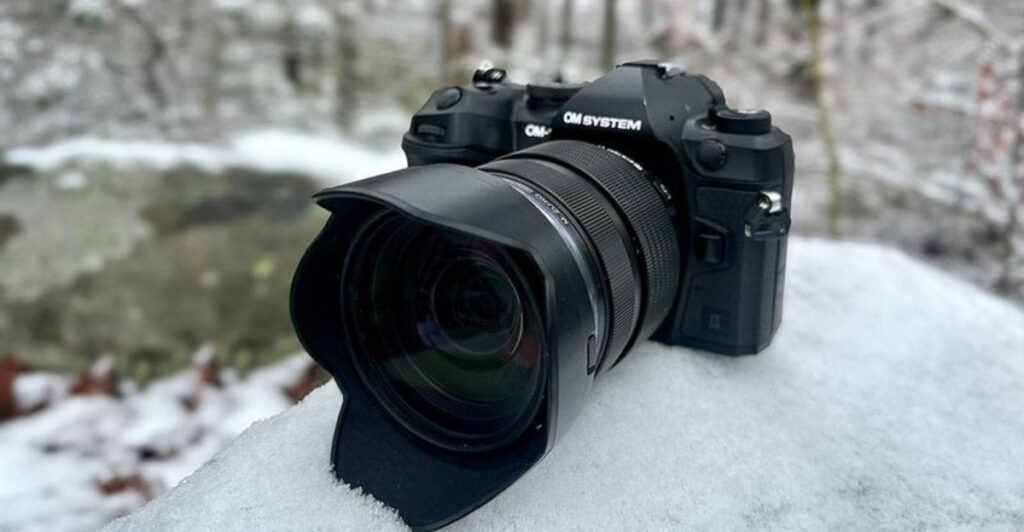
9. OM System OM-1 Mark II (lightweight reach + computational tools)

Micro Four Thirds sensors deliver a 2x crop factor, effectively doubling your lens reach compared to full-frame systems. That means a 300mm lens behaves like a 600mm, perfect for birds and distant wildlife without hauling massive glass.
Pro Capture mode starts recording frames before you fully press the shutter, so you’ll never miss an unpredictable takeoff or sudden movement. Bird detection autofocus is excellent, locking onto feathered subjects even against busy backgrounds.
The 20.4-megapixel stacked sensor and claimed 8.5 EV stabilization (per system marketing) make this rugged, IP53-style body a favorite among traveling photographers.
10. Panasonic Lumix G9 II (MFT speed and value)

Modern autofocus and fast electronic shutter bursts come together in a weather-sealed package that won’t break the bank. The G9 II offers 25 megapixels and shoots up to 60 frames per second, giving entry-to-intermediate wildlife shooters serious firepower.
Improved subject detection autofocus tracks animals more reliably than older Panasonic bodies, closing the gap with competitors. Dual UHS-II SD card slots provide affordable, widely available storage with redundancy for important shoots.
The Micro Four Thirds format keeps your entire kit light and compact, ideal for backpackers or photographers who want to hike all day without shoulder strain.
11. Canon EOS R7 (APS-C reach on a budget)

The 1.6x crop factor effectively extends your telephoto lenses, turning a 400mm into a 640mm equivalent for a fraction of the cost of bigger glass. At 32.5 megapixels, you have plenty of resolution to crop even tighter if needed.
Shooting at 15 frames per second with the mechanical shutter or 30 frames per second electronically, you’ll capture fast action without spending flagship money. Animal tracking with Dual Pixel CMOS AF across the frame keeps subjects sharp even when they move unpredictably.
RAW Burst mode with pre-shooting records frames before you press the shutter, perfect for split-second moments you can’t predict.
12. Nikon Z6 III (compact full-frame with trickle-down AF)

Technology from Nikon’s flagship models has trickled down into this lighter, more affordable body, making it a solid hybrid for wildlife and travel. The 24.5-megapixel partially-stacked sensor balances resolution with speed, delivering fast bursts up to around 20 frames per second with the electronic shutter.
Advanced subject detection inherited from higher-end bodies locks onto animals reliably, even in tricky lighting. 6K/60p video capabilities make this a strong choice if you shoot both stills and footage during your adventures.
Compact size and excellent ergonomics mean you can carry it all day without fatigue on long hikes or safaris.
13. Canon EOS R6 Mark II (action-friendly all-rounder)

Excellent autofocus and up to 40 frames per second with the electronic shutter pack serious performance into a smaller, lighter body. The 24-megapixel full-frame sensor excels in low light, making it perfect for photographing mammals at dawn or dusk when many animals are most active.
Robust subject detection tracks birds in flight and running mammals with impressive accuracy, keeping them sharp across the frame. Shooting at 12 frames per second with the mechanical shutter gives you quieter operation when noise might spook skittish subjects.
Strong high-ISO performance means you can keep shooting even as the sun sets and shadows deepen around you.
14. Sony α6700 (compact APS-C with AI subject recognition)

When you’re hiking long distances, every ounce matters, and the α6700’s compact body won’t weigh you down. Advanced animal and bird recognition inherited from higher-end Sony models locks onto subjects intelligently, even distinguishing eyes for precise focus.
The roughly 26-megapixel APS-C sensor provides enough resolution for moderate cropping while keeping file sizes manageable. In-body stabilization helps you shoot handheld with longer lenses when a tripod isn’t practical on the trail.
AI-enhanced subject tracking adapts to different animals and behaviors, making it easier to capture sharp shots of unpredictable wildlife without constant manual adjustments.
15. Fujifilm X-H2 (bonus high-res APS-C for crops)

If detail matters more than speed for your style of wildlife photography, the X-H2’s 40-megapixel sensor gives you plenty of pixels to crop into distant subjects. Perched birds and slower-moving mammals become frame-filling portraits even when you can’t get close.
Modern autofocus performance and rapid shooting options keep up with moderate action, though this body prioritizes resolution over the X-H2S’s speed. Pairing it with Fujifilm’s XF 150-600mm lens creates a compelling kit for birders and nature photographers.
The robust body handles field conditions well, and Fujifilm’s color science delivers pleasing tones straight out of camera with minimal editing needed.