

Affiliate disclosure: As an Amazon Associate I earn from qualifying purchases. Learn more
You’re halfway up a cobblestone street at golden hour, the light is perfect, and your camera battery is already flashing red. Every traveler has been there – and it’s exactly why choosing the right travel camera matters.
The best travel cameras don’t just deliver beautiful photos; they keep up with long days, unpredictable weather, and spur-of-the-moment adventures without weighing you down. Whether you’re chasing sunrises, wandering night markets, or shooting from a moving train, you need a camera that’s reliable, portable, and powerful.
In this guide, we break down the top travel cameras using real-world performance – not hype. You’ll find clear pros and cons, practical shooting insights, and the specs that actually affect your trip, including CIPA battery ratings, image stabilization performance, and low-light reliability.
Let’s help you pick a camera that won’t quit before the memories are made.
1. FUJIFILM X-E5 (XF23mmF2.8 Kit)

The FUJIFILM X-E5 blends classic rangefinder styling with modern power in a compact body. Its 40.2MP X-Trans sensor produces crisp, detailed files that hold up to tight crops.
The included XF23mm F2.8 is a travel-friendly prime with weather resistance and a natural field of view for street and food. Battery life is solid for a slim body, and USB-C charging makes it easy to top up from a power bank between stops.
In-body image stabilization up to seven stops helps in dim alleyways and museums, meaning lower ISO and sharper handheld shots. Film Simulations deliver pleasing color straight out of camera, which lets you spend more time exploring and less time editing.
Subject detection AF tracks faces, animals, and more with confidence. The slim profile fits into a sling bag without weighing you down.
While 40MP demands good technique, the reward is depth and texture that feel premium. If you appreciate tactile controls and want a lightweight kit that still punches above its size, the X-E5 makes a beautiful travel companion.
2. Sony RX100 VII
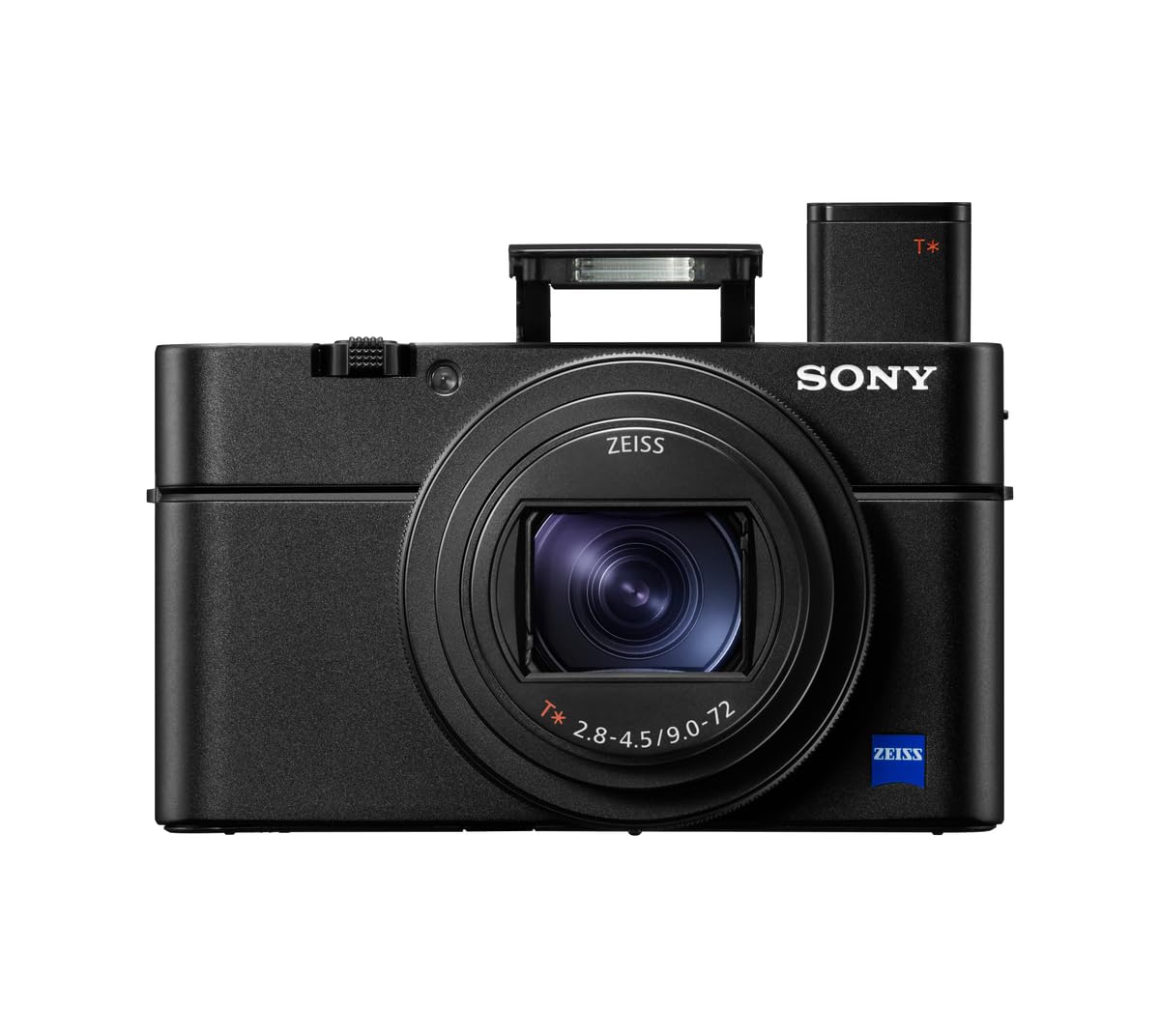
The Sony RX100 VII is the compact you throw in a pocket and forget until the moment matters. Its 1-inch sensor and Zeiss 24-200mm equivalent zoom deliver crisp detail for street scenes, quick portraits, and distant landmarks.
Autofocus locks in as fast as 0.02 seconds, which means fewer missed shots when a scene changes without warning. Battery life is rated around 260 shots by CIPA, but real-world mixed shooting with airplane mode and the EVF often stretches a bit further.
You can also top up via USB, which is perfect on trains or during cafe breaks. Handheld 4K with active stabilization keeps travel clips smooth, and the microphone jack is a subtle bonus for vlogs.
For stills, colors are punchy and JPEGs look finished, while RAWs give latitude for sunsets. Burst speeds up to 20 fps help with markets and moving subjects.
It is not cheap, and the tiny grip can feel slick, but the portability-to-performance ratio is unmatched. If you want minimal weight and maximum confidence, this is the pocket rocket to trust.
3. Sony Alpha A6100

The Sony A6100 hits a sweet spot for travelers who want interchangeable lenses without a heavy bag. Its 24.2MP APS-C sensor brings clean detail and solid dynamic range for cityscapes and beach light.
Real-time Eye AF and tracking make spontaneous portraits effortless, so your travel companions always look sharp. Rated at about 420 shots per charge, it comfortably covers a day of casual shooting.
You can push further by disabling Bluetooth and using the viewfinder instead of the LCD. Continuous shooting up to 11 fps catches street performers or quick wildlife moments.
Colors are flexible, with Sony’s Creative Styles and strong RAW files for editing latitude. Video delivers 4K with reliable autofocus, and the 180-degree flip screen helps for selfies or vlogs.
There is no in-body stabilization, but stabilized lenses handle most scenes. The body is compact, controls are straightforward, and the ecosystem of affordable E-mount lenses is a huge plus.
For an approachable travel kit with excellent autofocus and battery life that does not stress you out, the A6100 is a keeper.
4. Fujifilm X100VI
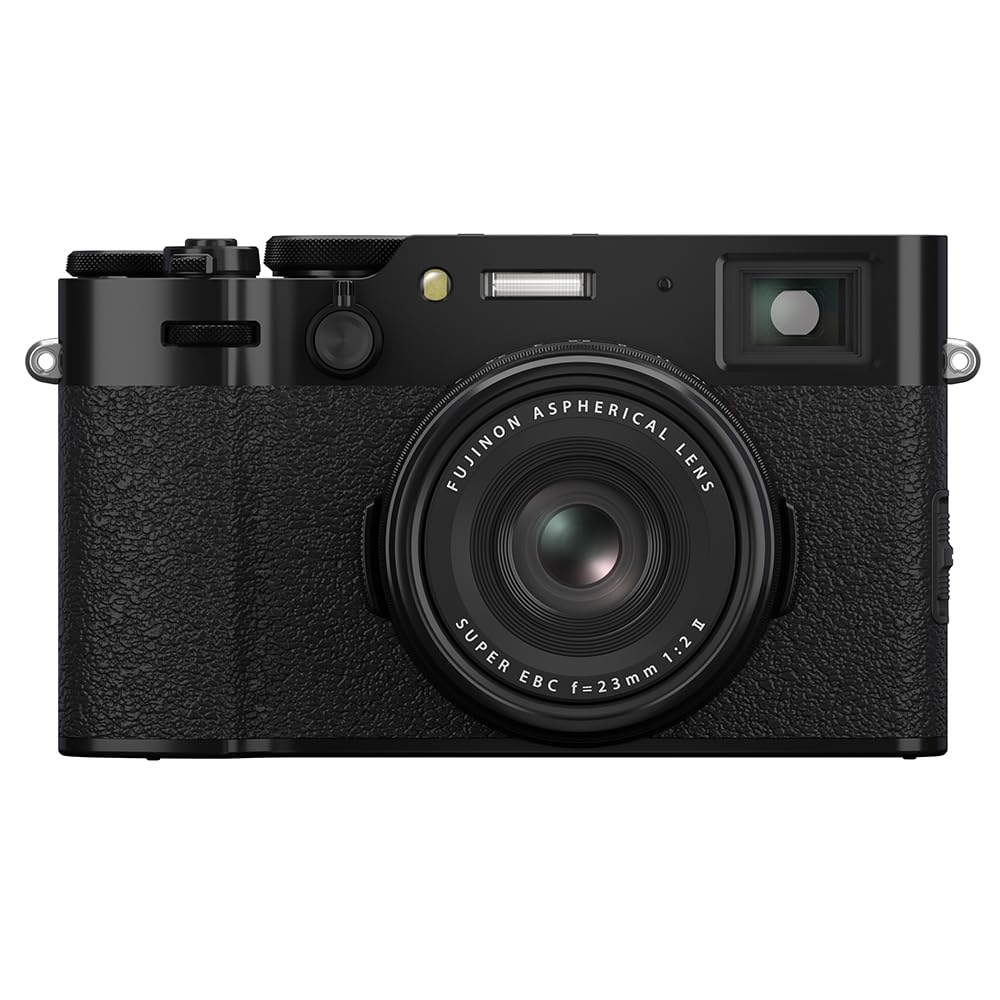
The X100VI is a love letter to travel photography with a fixed 23mm F2 lens and a 40.2MP sensor. It is discreet, fast, and surprisingly versatile for landscapes, food, and environmental portraits.
The hybrid optical and electronic viewfinder invites you to compose deliberately while staying connected to the scene. Battery life is respectable, and many users report getting a full day with mindful settings and occasional USB-C top-ups.
The new in-body stabilization up to 6 stops makes night streets and interiors easy without a tripod. JPEGs with Film Simulations like Classic Chrome are travel-perfect, while RAWs offer headroom for dramatic skies.
Focus is confident, with face detection that helps in busy markets. Weather sealing with the adapter makes it more trip-proof.
Although the fixed lens demands foot zooming, the payoff is size, simplicity, and consistent rendering. For travelers who value storytelling and minimal gear, the X100VI is a reliable, inspiring partner that fits in a small bag and never feels like a burden.
5. Canon EOS R100 (RF-S 18-45mm)

The Canon EOS R100 is a compact, budget-friendly entry to the RF system that is perfect for stress-free travel. Its 24.1MP APS-C sensor delivers crisp images with pleasing Canon color, which means less tweaking.
The bundled RF-S 18-45mm keeps your kit light while covering everyday focal lengths for city and nature. Battery life around 430 shots is strong for a small body, especially if you minimize chimping and Wi-Fi.
Dual Pixel AF tracks faces reliably in daylight, and the menus are beginner-friendly. 4K is cropped, but Full HD 60p is smooth for casual clips. Pair it with a small RF-S prime for low-light cafes and it stays featherweight.
The grip is comfortable, the EVF is handy in bright sun, and USB charging is convenient on the go. While it lacks advanced video features and weather sealing, the simplicity means you focus on scenes instead of settings.
If you are stepping up from a phone and want dependable battery life with easy results, the R100 is a smart travel starter.
6. Ricoh GR IV
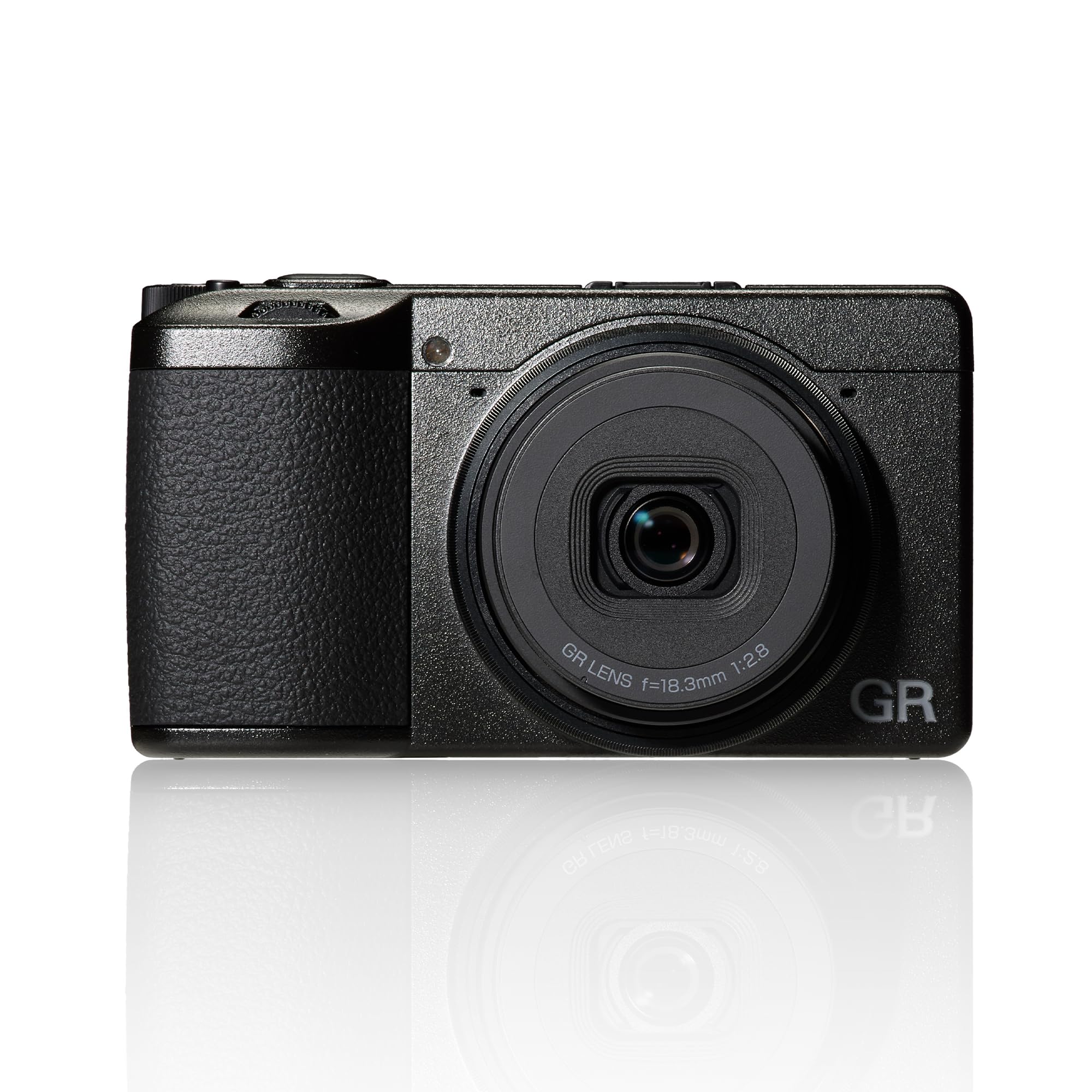
The Ricoh GR IV is built for pocketable street photography with a 25.7MP APS-C sensor and a sharp 28mm equivalent lens. The stealthy profile encourages candid travel images and fast reactions.
Start-up is quick and controls are customizable, so you can capture fleeting scenes without fuss. Battery life is rated around 250 shots, but smart power settings and a spare battery make it an all-day companion.
The upgraded in-body stabilization helps keep ISO down in dusk light, yielding cleaner files. JPEG rendering is lovely and film-like, while RAWs grade well with good shadow recovery.
Snap Focus remains a signature feature for instant zone focusing, perfect for street and markets. Build quality is sturdy for its size, and the grip is secure even with one-handed shooting.
It is not a zoom, so you compose with your feet, but that limitation fosters creativity and consistency. If you value portability, discreet operation, and image quality that exceeds its size, the GR IV is an outstanding one-pocket solution.
7. OM SYSTEM OM-3

The OM SYSTEM OM-3 embraces travel in tough conditions with IP53-rated sealing and a compact Micro Four Thirds system. Its 20MP stacked sensor and TruePic X processor deliver fast readout and responsive shooting.
Computational features like Live ND and High Res Shot expand creative options without extra gear. Battery life is dependable for a full day of mixed stills and short clips, and USB power delivery keeps you rolling on buses or in airports.
The class-leading 5-axis stabilization helps achieve sharp images at slow shutter speeds, great for twilight cityscapes. With lighter lenses, your carry-on stays comfortable, yet you can still reach telephoto with small zooms.
The viewfinder is crisp, controls are tactile, and the system feels confidence-inspiring in rain or dust. While Micro Four Thirds has a smaller sensor, the portability, stabilization, and sealed lenses make it a real travel workhorse.
If you prioritize weather resistance and creative tools over sheer sensor size, the OM-3 will keep up from alleyways to ridgelines.
8. Canon PowerShot G7 X Mark III

The PowerShot G7 X Mark III is a favorite pocket camera for creators who want great JPEGs and easy video. Its 1-inch sensor and fast 24-100mm equivalent lens handle food, architecture, and portraits with pleasing color.
The flip-up screen simplifies framing, and the interface is friendly if you prefer straightforward settings. Battery life is modest, so plan for a spare, but USB charging makes top-ups painless on the move.
Image stabilization helps for handheld city night scenes, and 4K video is handy for reels. Autofocus is reliable for casual shooting, and the lens’ bright aperture helps keep ISO low indoors.
For travel, the real draw is compact size plus quality that beats a phone, especially in mixed light. It is not as fast to focus as high-end mirrorless bodies, but it is lighter and more discreet.
If your priority is pocketability, punchy color, and simple operation with a tilt screen, the G7 X Mark III keeps your bag uncluttered and your feed sharp.
9. Sony Alpha 7C

The Sony a7C brings full-frame quality to a travel-friendly package. Its 24.2MP sensor delivers excellent dynamic range for sunrise to sunset, and low-light performance is a clear step up.
Paired with small primes or the collapsible kit zoom, it slips into a sling without weighing you down. Battery life is a highlight, with the NP-FZ100 routinely exceeding 700 shots in mixed use.
That means more exploring and fewer charging stops. In-body stabilization keeps handheld images sharp, and 4K video with reliable autofocus fits vlogging or documentary moments.
The flip-out screen makes framing easy in tight spaces. Weather resistance is decent, the grip is comfortable, and the lens ecosystem is extensive.
While the EVF is compact, the overall usability is high once you customize buttons. If you want full-frame look, strong battery endurance, and a body that travels well, the a7C is a brilliant middle ground between power and portability.
10. GoPro HERO13 Black

The HERO13 Black is the travel action camera for rough weather, water, and speed. It records crisp 5.3K video with excellent stabilization, which makes clips look cinematic without a gimbal.
New Enduro battery tech extends recording in cold or heat, so you can film longer on mountain passes or beaches. Battery life varies by resolution, but real-world endurance with the Enduro pack is noticeably better than older models.
HyperSmooth 6.0 keeps footage steady when you are biking cobblestones or sprinting through terminals. Still photos are solid for social sharing, and you can pull 24.7MP grabs from video for quick souvenirs.
Mounts are abundant, waterproofing to 10 meters is reassuring, and the app simplifies edits on the fly. It is not a low-light monster, but for daytime travel action it excels.
If your trips involve surfing, climbing, or fast city rides, the HERO13 Black stays tough, stable, and ready long after your phone taps out.
11. DJI Osmo 360 (Adventure Combo)
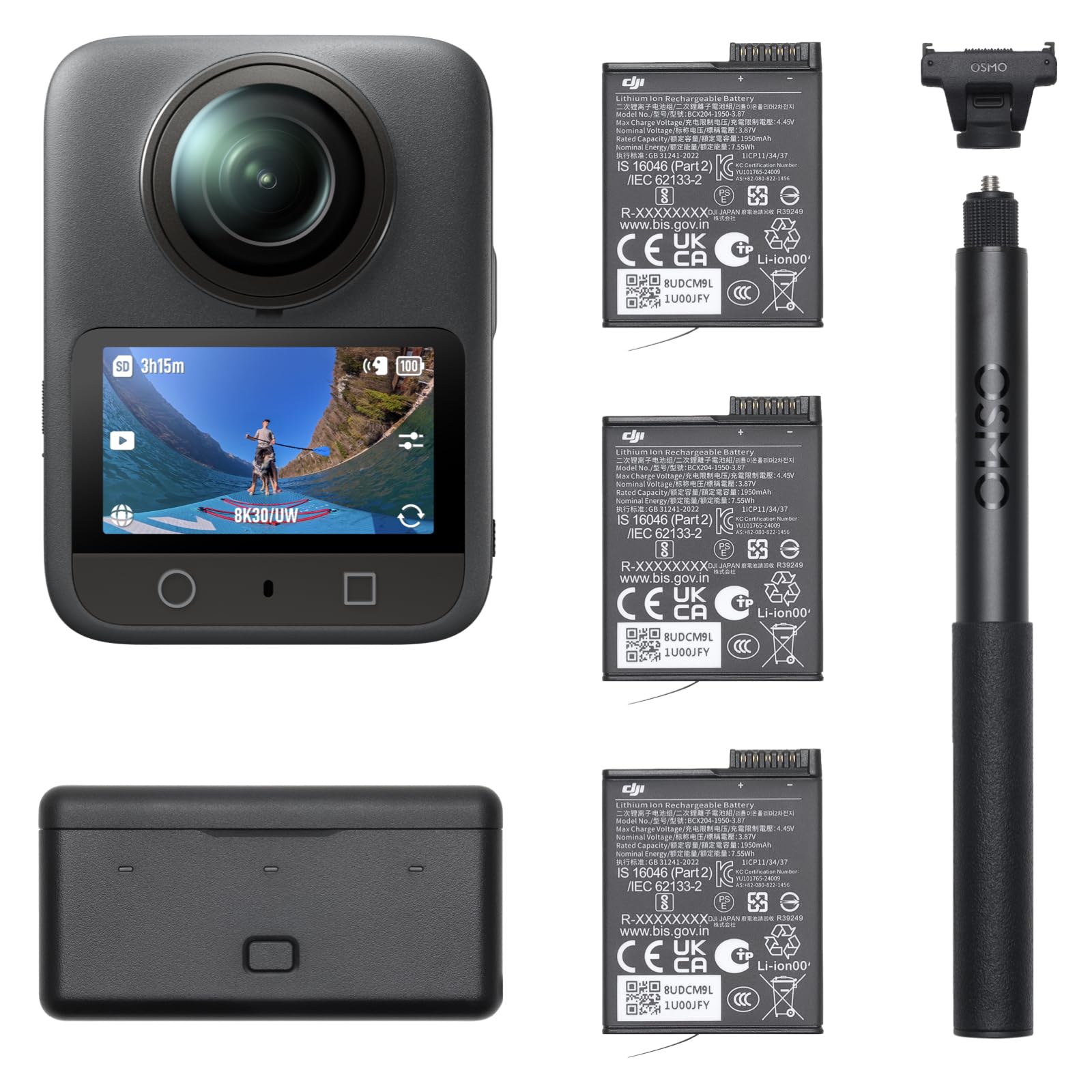
The DJI Osmo 360 captures your entire environment in 8K, which is fantastic for travel storytelling. With a 1-inch 360 imaging system, low-light performance is better than typical 360 cams, so sunrise and city nights look cleaner.
The Adventure Combo’s three batteries help extend total runtime across long days. Built-in 105GB storage means you can shoot when you forget a card, and USB-C charging tops up quickly at lunch.
Invisible selfie stick footage looks as if a drone is following you, creating immersive views with minimal setup. Four mics record spatial audio that places listeners inside the scene.
It is waterproof to 10 meters and handles cold, so you can ski, snorkel, or wander rainy alleys without worry. Editing is streamlined in the Mimo app with smart reframing, though exporting 8K can be heavy on older phones.
If you want an all-around adventure camera that records everything and lasts through the itinerary, the Osmo 360 is a compelling pick.
12. Sony HX99

The Sony HX99 is a tiny superzoom that reaches a massive 24-720mm equivalent. For travelers who want one pocket camera to do it all, that reach covers cityscapes, wildlife, and details on cathedral spires.
The pop-up EVF and tilting screen make framing flexible in harsh sun or tight corners. Battery life is respectable for a high-zoom compact, and USB charging helps extend shooting between trains. 4K video with full pixel readout looks crisp, and the Zeiss lens delivers better sharpness than you would expect at this size.
Eye AF helps keep family shots in focus in busy squares. It is not ideal in very low light, but for daytime sightseeing the convenience and range are unbeatable.
Colors are pleasant, and the control ring allows quick access to settings. If you want minimal weight with maximum focal coverage and a battery that survives an active day, the HX99 is a smart travel tool.
13. Canon PowerShot SX70 HS
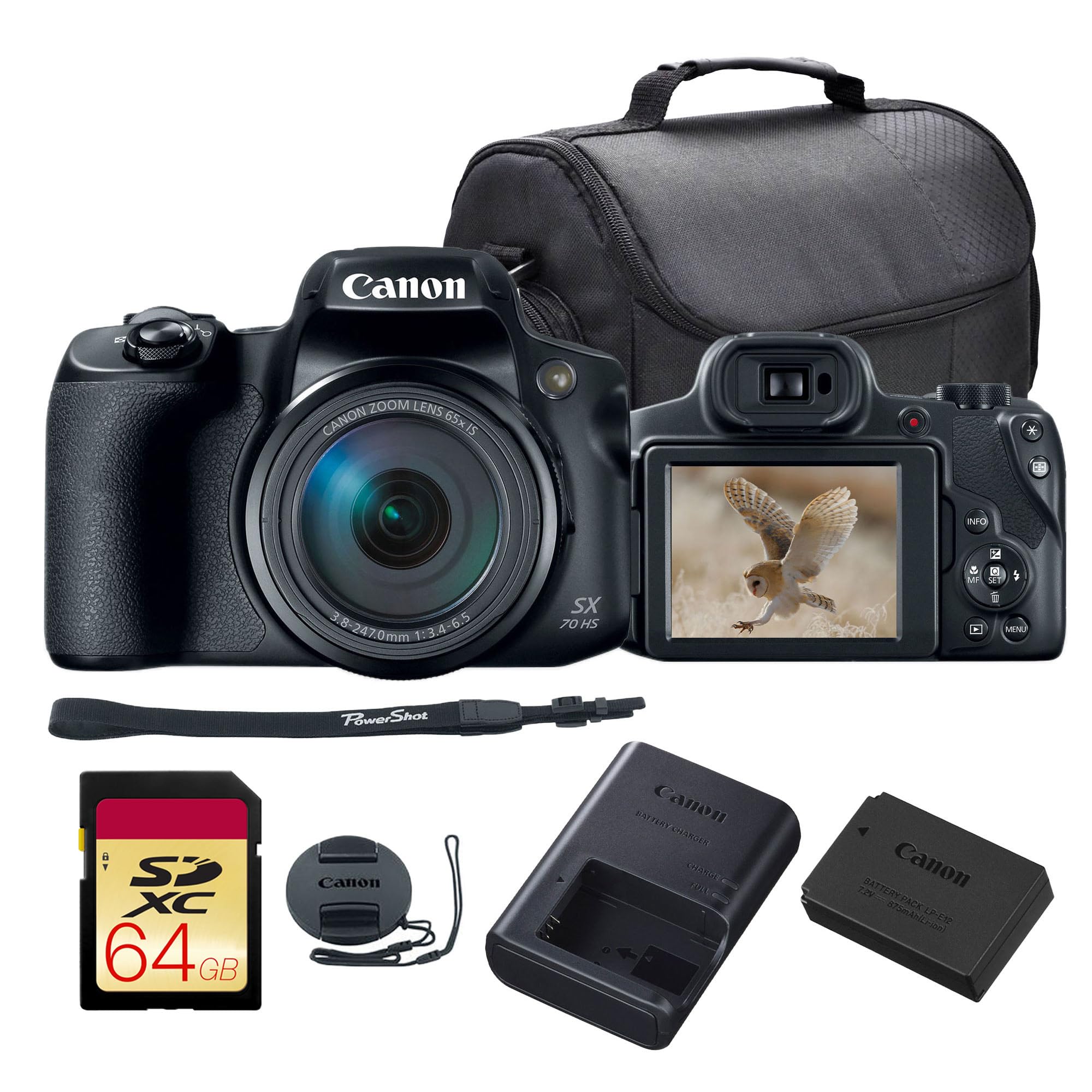
The Canon SX70 HS is an all-in-one superzoom that reaches a 21-1365mm equivalent, which is incredible for travel safaris and distant city details. The 20.3MP sensor and DIGIC 8 processor produce solid JPEGs and usable 4K for casual clips.
Zoom Framing Assist helps keep moving subjects in the frame at extreme telephoto. Battery life is good for a day of sightseeing, especially if you avoid constant LCD playback.
The body handles like a mini DSLR, providing steady grips for long zooms. Optical stabilization keeps handheld shots sharp, and 10 fps burst helps with birds or street action.
Built-in Wi-Fi and Bluetooth make sharing easy from a hotel room. It is not pocketable, but you avoid lens swaps and still travel light compared to interchangeable systems.
For travelers who want reach, simplicity, and dependable power in one camera, the SX70 HS is a practical companion that punches above its weight for wildlife and landmarks.